


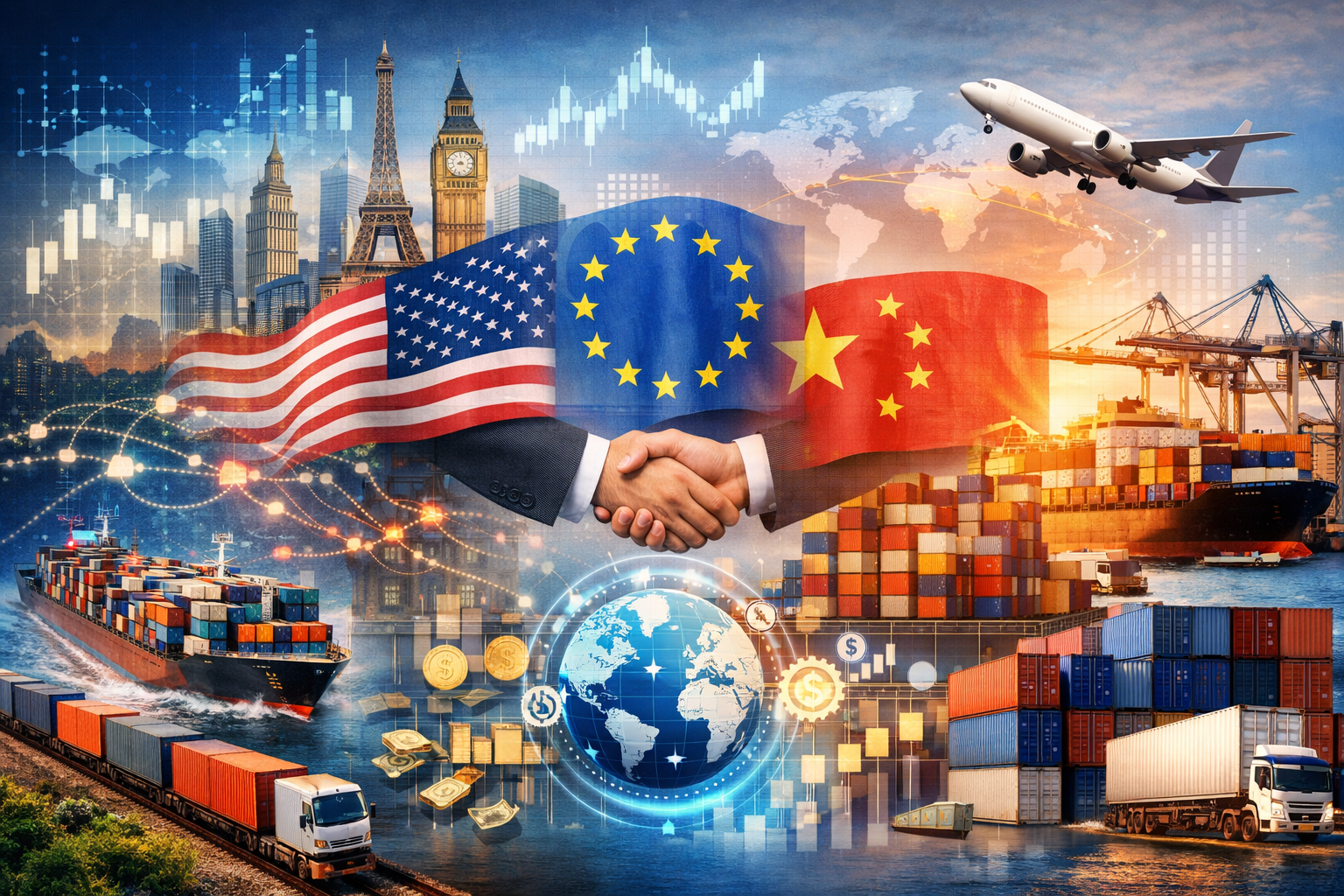
At Davos 2026, ASEAN emerged as the epicenter of supply-chain realignment. As firms pursue China+1 strategies, Southeast Asia is absorbing manufacturing capacity at unprecedented speed.
Major Deals Summary
- RCEP-linked trade and investment discussions
- Manufacturing relocation to Vietnam, Indonesia, and Malaysia
- Semiconductor and EV supply-chain partnerships
- Digital trade and fintech expansion
- Infrastructure corridor investments
Strategic Significance
ASEAN’s advantage lies in flexibility. Rather than replacing China, it complements global supply chains, offering diversification without disruption.
Winners and Risks
Winners
- Electronics and EV manufacturers
- Logistics and port operators
- Digital trade platforms
Risks
- Infrastructure strain
- Skill shortages
- Geopolitical pressure from major powers
2026 Outlook
ASEAN’s trajectory suggests it may become the factory of the future, not through scale alone, but through adaptability.
Conclusion
Supply chains are fragmenting—and ASEAN is capitalizing.


