


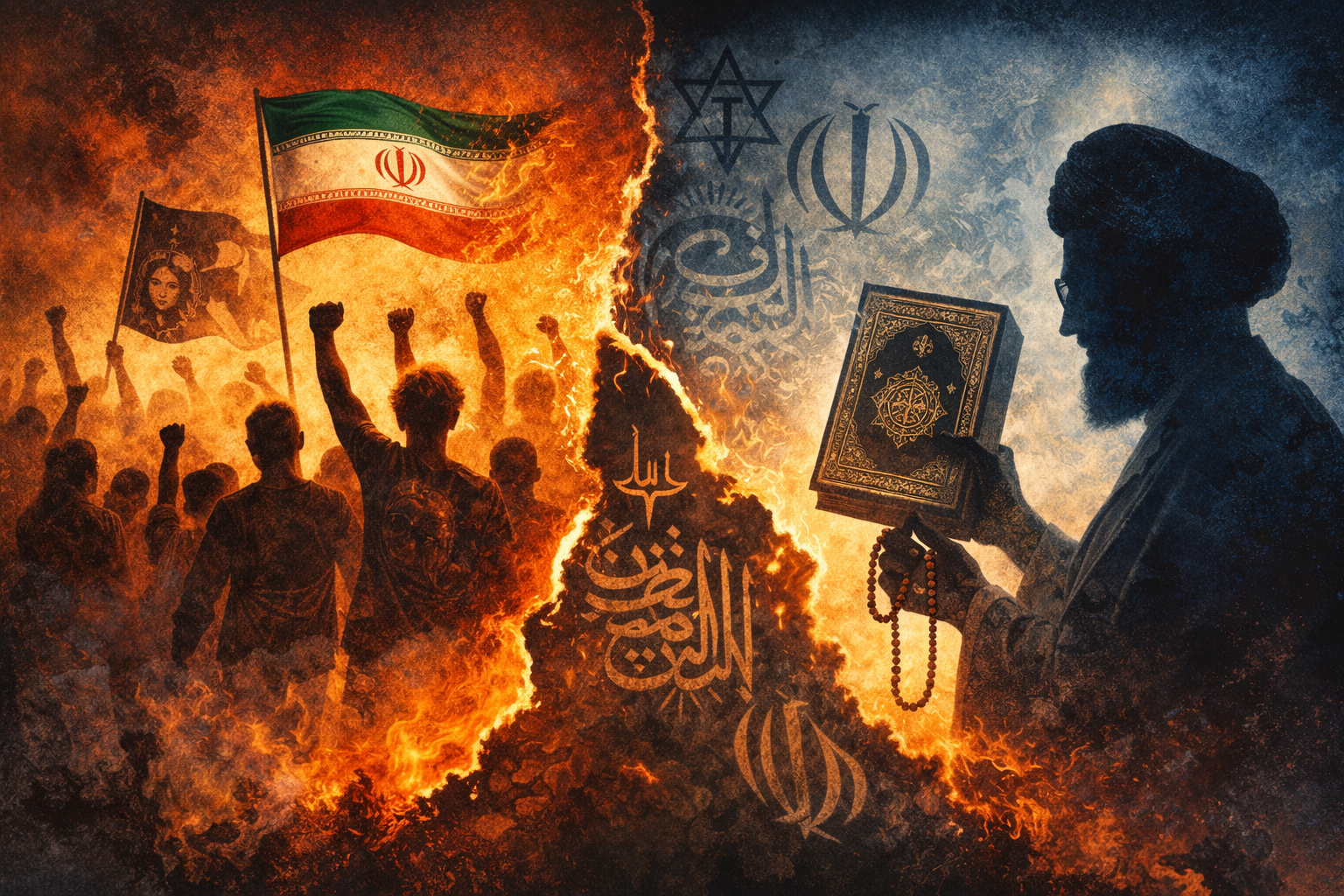
28 February 2026 — Multiple international outlets reported that Iran’s Supreme Leader, Ali Khamenei, may have been killed in coordinated U.S.–Israeli strikes targeting senior leadership compounds in Tehran.
Reuters, citing a senior Israeli official, reported intelligence assessments suggesting Khamenei may have been killed, though confirmation from Tehran was not immediately available. Iranian state media did not confirm the claim.
Al Jazeera reported explosions in Tehran and referenced statements from Israeli and Western officials indicating the Supreme Leader had been targeted.
As of publication, definitive confirmation remains contested.
What is not contested is the scale of the geopolitical shockwave.
The question — Is Ali Khamenei alive or dead? — carries implications far beyond personal fate. It affects Iran’s nuclear command structure, the balance between clerical authority and the Islamic Revolutionary Guard Corps (IRGC), global energy markets, and regional security calculations from Tel Aviv to Riyadh to Washington.
History rarely turns on a single strike. But it often turns on what follows.
PART I — The Supreme Leader Question: Power, Structure and Survival
Since 1989, Khamenei has led Iran, succeeding Ruhollah Khomeini. Elevated at age 50 despite lacking the highest clerical rank, he gradually centralized authority into one of the most consolidated leadership systems in the Middle East.
Under his tenure:
- The IRGC expanded into a military, intelligence and economic conglomerate.
- Iran’s nuclear program advanced to threshold enrichment capability.
- Proxy networks across Lebanon, Iraq, Syria and Yemen evolved into an integrated deterrence architecture.
- Strategic partnerships with Russia and China deepened.
- Domestic protest movements were suppressed through layered security mechanisms.
The Supreme Leader appoints senior judiciary officials, commands the armed forces, influences state broadcasting and defines nuclear red lines. The office is not electoral.
It is structural.
The structural question now eclipses the personal one.
PART II — Two Scenarios: If Khamenei Is Alive vs If He Is Dead
Scenario A: If Khamenei Is Alive
Authoritarian systems under external attack rarely liberalize. They consolidate.
A senior Israeli official quoted by Reuters stated:
“If he survived, Tehran will treat this as an existential attack on the regime itself.” (Reuters, 28 Feb 2026)
An existential narrative would justify:
- Expanded surveillance
- Arrests of reformist figures
- Communication restrictions
- Increased Basij and IRGC authority
Nuclear Posture
A former U.S. National Security Council official told Al Jazeera:
“Tehran’s nuclear doctrine historically emphasizes deterrence ambiguity, not suicidal escalation.” (Al Jazeera, 28 Feb 2026)
Probability assessment if alive:
- Immediate nuclear use: Low
- Enrichment acceleration: Elevated
- Proxy retaliation: High
- Cyber escalation: Elevated
Iran could raise uranium enrichment levels without formally weaponizing — increasing leverage while maintaining strategic ambiguity.
Diplomatic space would narrow. Hardliners would dominate messaging.
Prime Minister Benjamin Netanyahu stated:
“Israel and the United States launched a combined operation to remove the existential threat posed to Israel by the regime of the Ayatollahs in Iran.”
Such framing strengthens Tehran’s deterrence narrative internally.
Scenario B: If Khamenei Is Dead
If confirmed, his death would represent Iran’s most consequential political event since 1989.
Who Replaces Him?
Formally, succession rests with the Assembly of Experts. In crisis, real power rests within:
- IRGC command structures
- Senior clerical networks
- The Supreme National Security Council
- Patronage-linked economic institutions
An Iranian political analyst told Iran International:
“If the Supreme Leader is gone, the IRGC becomes kingmaker — or king.” (Iran International, 28 Feb 2026)
Possible outcomes:
- A conservative cleric acceptable to the IRGC
- A temporary leadership council
- Militarized consolidation
- Elite fragmentation
The most stabilizing outcome: rapid IRGC-backed consensus.
The most destabilizing: factional rivalry under external pressure.
Nuclear Command and Control Risk
Iran’s nuclear infrastructure is compartmentalized across multiple secured facilities, including Natanz and Fordow. Oversight is layered.
The risk is not immediate unauthorized nuclear use.
The risk is miscalculation during transition.
Potential ripple effects:
- Israeli recalibration of preemptive doctrine
- U.S. deterrence repositioning
- Gulf missile defense activation
- Energy market volatility
Markets would react before militaries.
PART III — Regional, Energy and Global Consequences
Tehran
Residents reported explosions, communication slowdowns, fuel shortages and heightened security presence. Information scarcity amplified uncertainty.
Israel
Heightened defensive posture amid Hezbollah escalation concerns.
Gulf States
- Saudi Arabia
- United Arab Emirates
- Qatar
- Bahrain
- Kuwait
- Oman
Primary concerns:
- Strait of Hormuz disruption
- Oil price spikes
- Missile retaliation
- Cyber warfare
Washington
Representative Ilhan Omar warned:
“Military strikes will not make us safer; they will inflame tensions and push the region further into chaos.”
Former Secretary of State Mike Pompeo framed confrontation as part of a broader geopolitical rivalry involving Russia and China.
Domestic division in the U.S. complicates sustained escalation.
Nuclear Escalation Probability Matrix
| Risk Category | Probability |
|---|---|
| Direct nuclear strike | Low |
| Proxy escalation | High |
| Cyber retaliation | Elevated |
| Hormuz maritime disruption | Moderate–High |
| Full regime collapse | Low–Moderate |
The greatest danger lies in escalation spirals during leadership uncertainty.
Final Strategic Assessment
Whether Khamenei lives or dies, the Islamic Republic faces structural stress.
If alive:
- Consolidation
- Hardline strengthening
- Nuclear brinkmanship
If dead:
- Succession maneuvering
- Expanded IRGC dominance
- Heightened regional volatility
The next three to six months will determine whether Iran:
- Hardens
- Transitions
- Or fractures
The Middle East stands on alert.
Energy markets remain volatile.
Global powers recalibrate.
And in Tehran, the central question remains unresolved.
History rarely turns on a single strike.
But it sometimes turns on what follows.


