


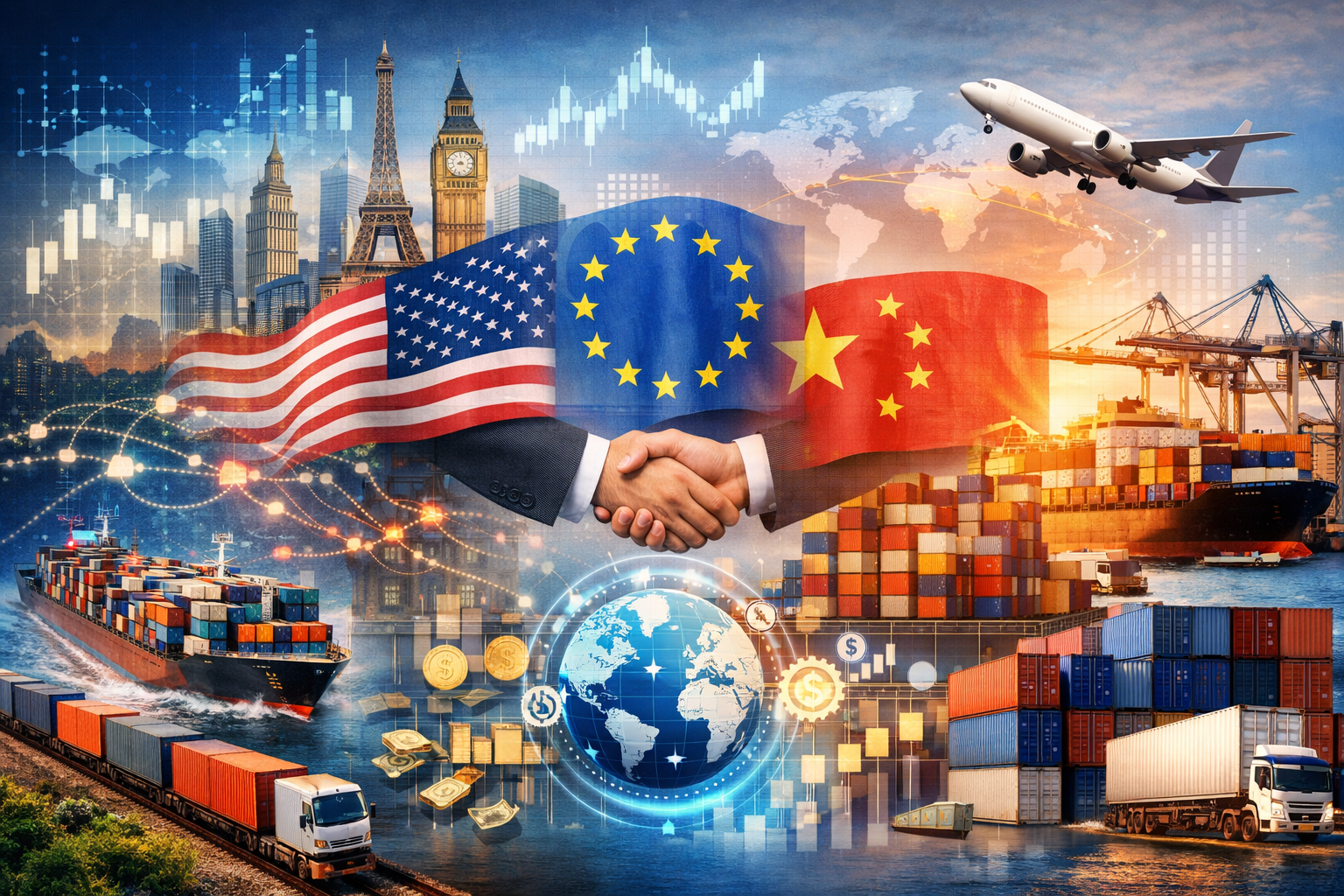
At Davos 2026, European Union framed its economic agenda around resilience. After years of dependence on external suppliers for energy, technology, and manufacturing, Europe is recalibrating its growth model.
The focus was not speed but sovereignty.
Major Deals Summary
- Progress in EU–India trade negotiations
- Green industrial investments aligned with carbon border mechanisms
- Supply-chain diversification initiatives across Africa and Asia
- Reinforcement of NATO-linked economic coordination
- Expansion of digital and AI regulatory leadership
Strategic Significance
Europe’s strategy combines industrial policy with values-based regulation. Carbon border taxes and digital rules aim to protect competitiveness without abandoning climate and governance standards.
Winners and Risks
Winners
- Clean-tech and advanced manufacturing firms
- Trusted supply-chain partners
- Regulatory-compliant digital companies
Risks
- Cost pressures on industry
- Slower innovation cycles
- Internal political fragmentation
2026 Outlook
Europe’s competitiveness will depend on balancing regulation with growth incentives.
Conclusion
Europe is choosing autonomy over dependence—even if that path is harder.


