


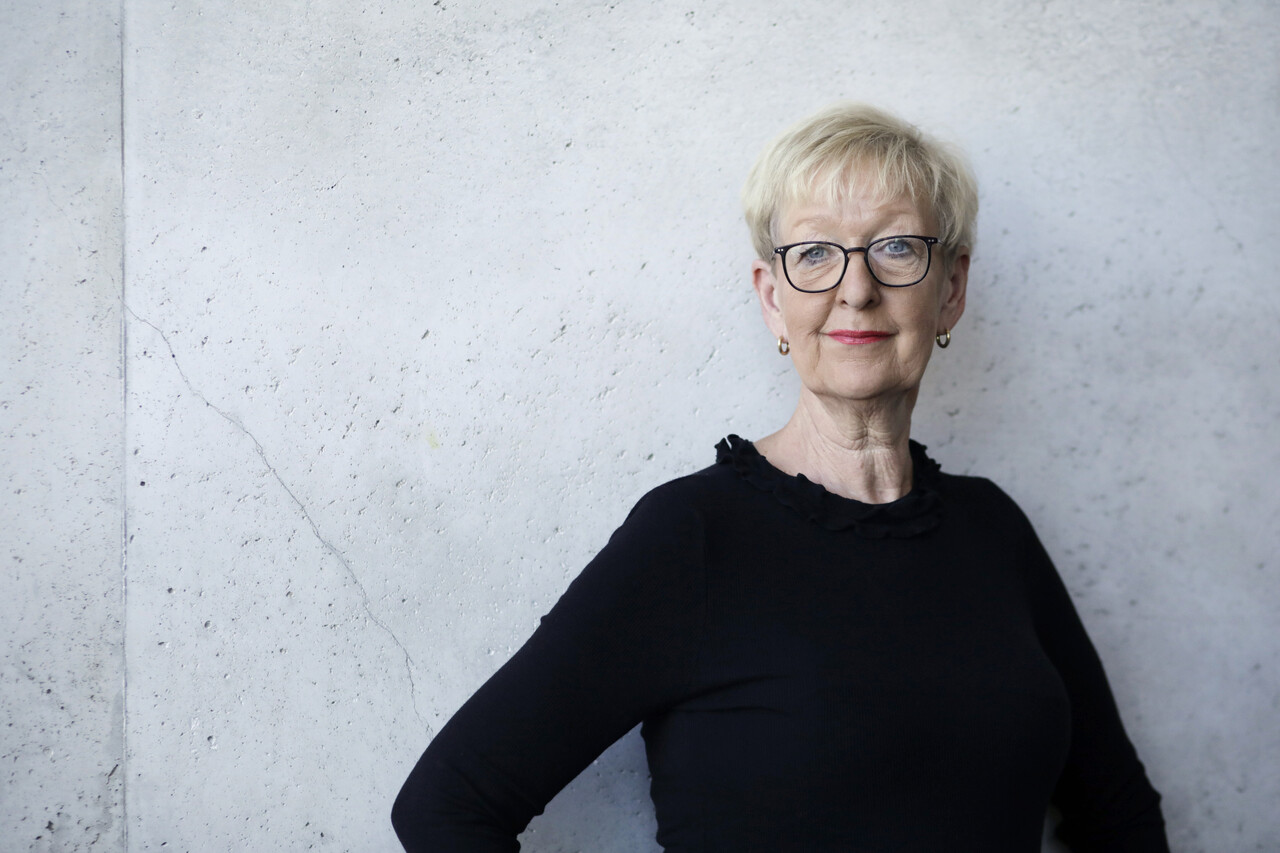
At a time when global security is being reshaped by war in Europe, shifting alliances, political polarization, and rapid technological change, few voices carry the depth of experience and clarity of perspective of Dr. Stefanie Babst.
In this wide-ranging and deeply reflective conversation with Danish Shaikh, Editor at The International Wire, Dr. Babst draws on more than two decades at the heart of NATO’s strategic and diplomatic machinery to assess where the transatlantic alliance stands today — and where it may be headed next.
From her years as NATO’s Deputy Assistant Secretary General for Public Diplomacy to her leadership of the Alliance’s Strategic Foresight Team, Dr. Babst has been closely involved in shaping Western responses to some of the most consequential security challenges of the modern era. In this interview, she speaks candidly about Europe’s defence responsibilities, the future of NATO, the impact of U.S. political uncertainty, the lessons of Ukraine’s resistance, and the growing risks of strategic complacency.
This conversation offers readers rare, unfiltered insight from one of Europe’s most respected strategic thinkers at a moment when the choices made today will define global stability for decades to come.
The Strategic Moment We Are Living In
You have witnessed multiple phases of NATO’s evolution over two decades. How would you characterize the current strategic moment, and how different is it from previous periods of tension or uncertainty?
During my 23 years at NATO, I have seen quite a lot of stormy turbulences in the transatlantic relationship. But we have always managed to rally members countries behind a common course of action. Not everything was perfect – for instance, NATO’s operation in Afghanistan – but the allies were able to reach common ground. Notwithstanding sporadic disagreements between individual allies and regular calls from the U.S. for a fairer share of the military burden, the allies’ vow to defend each other in case of need and maintain a credible military deterrence was never put into question, nor was the willingness of any occupant of the Oval Office to come to the aid of a NATO member if attacked.
This is no longer the case. The Trump Administration began to question the Alliance’s value and leave the transatlantic consensus on Russia’s war against Ukraine more than a year ago. Ever since, it is more than obvious that Trump and his MAGA acolytes think that multilateral cooperation is for fools. They disrespect the allies, threaten, coerce, ridicule and manipulate them. They are eroding NATO’s lifeline: trust in each other and in NATO’s purpose. Denying this fact – as painful as it is for some – will not help us to secure Europe’s future and our democratic values.
NATO’s Future in a Fragmented World
As geopolitical competition intensifies, how can NATO remain politically cohesive while accommodating different threat perceptions among its members?
Apart from the Trojan Horses Hungary and Slovakia, all the current NATO members countries agree that Russia is a fundamental threat to European security. They also share clear-eyed views on other security threats like terrorism, Islamic extremism, illegal migration and corruption. And they have even converged their assessments on China’s strategic ambitions. What they cannot agree upon is how to respond to those challenges. Is Russia an existential threat to Germany’s security? I guess the government in Berlin would say, no. So would Turkey or Portugal. But from a Polish or Estonian perspective it certainly is.
Yet if you are not clear about the nature of threat, how can governments craft a dedicated and robust strategic response? That’s one of the key problems we are facing. Four years into Russia’s reckless war against Ukraine, NATO still cannot describe a strategic end-state towards Moscow; it still has not been able to address the Russian aggression through an effects-based and holistic strategy. On top, Trump’s alignment with Putin makes such an effort now impossible.
Europe’s Defence Responsibility
To what extent do you believe Europe is genuinely prepared to take greater responsibility for its own defence, and what still stands in the way?
I think that Canada and most European governments have come to realize that the Pax Americana is history. They have long vowed to assume a bigger share of responsibility for their own security but most countries only made small and reluctant steps. This will have to change drastically. They will have to defend European security with all they can muster: modern military capabilities, a synchronized defence procurement effort, a strong whole-of society resilience, and above all, the necessary political will.
Most importantly, they have to abandon the widespread mindset that Europe is too weak to defend itself without the Americans. We are not. Of course, we can stand-up to Russia if we only wanted. But I fear there are still some politicians left who cannot possibly imagine a European future without Washington. Is it a lack of self-confidence? A lack of vision? Or strategic incompetence? I guess it is a mix of all three. Mark Rutte, NATO’s Secretary General, has just given us a vivid example, saying Europeans were dreaming. They could not possibly defend their own continent without the Americans.(https://today.rtl.lu/news/world/keep-dreaming-nato-chief-says-europe-cant-defend-itself-without-us-617928793). Thankfully, his remarks prompted very loud opposition.
The U.S. Factor and Alliance Stability
How should European allies manage long-term uncertainty about U.S. political cycles while maintaining credible deterrence?
For one, I strongly believe that Trump’s so-called erratic policy approach is designed on purpose. It may be true that he faces some cognitive challenges and lives in his own world, but his ‘unpredictability’ is a well-calculated means to create shock, disruption, disbelief and subordination reflexes among America’s traditional allies, partners and even foes. It is not just ‘his personal style’ but the a key element of the Trumpian approach to pursue his personal objectives, be it at home or abroad. He acts like a mafia boss. The other elements are well-known, too: diplomatic and economic coercion, personal intimidation and threats to use force.
Unless Americans succeed in getting rid of the Trump regime – which I do not see right now – Europeans, Canadians and their democratic partners in Asia must base their policy planning on the assumption that the Trump-MAGA crowd will remain in power for the next years to come. From my perspective the only logical consequence to draw then is for them to decouple from the United States, treat the Trump administration as an unfriendly force, and reinvigorate a NATO-like successor organisation jointly with Ukraine. As long as the majority of Europeans, Canadians and Ukrainians remain united in their political vision and effort to deter Russia, they will remain a credible military force.
Ukraine and the New Security Paradigm
What lasting lessons from the war in Ukraine will most shape European and transatlantic security over the next decade?
Despite its losses and setbacks, the Ukrainian Armed Forces are now the most combat-proven, resilient and technologically advanced military in Europe. There are many things that Western European forces can learn from them. Ukraine’s battlefield experience as well as its ability to produce and integrate modern warfare capabilities while fighting the Russians at the same time demonstrates the profound professionalism of the Ukrainian military. It will play a key element in Europe’s future security and defence posture. How can it not? Europeans would be completely foolish to regard Ukraine only as recipient of military and economic aid, as a burden. Rather Ukraine must be treated as a key strategic enabler and full-fledged member of a future European security architecture.
I have long argued that Ukraine must be part and parcel of the new strategic and military balance of power in Europe. But it is on us to help Ukraine winning the brutal war that Russia has unleashed on them and start discussing with the Ukrainian government how to form an integrated political and military structure with the rest of Europe and, of course Canada. Whether this will lead to a new format or expand on the Joint Expeditionary Force or even a new post-Trump NATO remains to be seen. My point is this: a group of capable, willing and intellectually savy Europeans should meet with Canadians and Ukrainians and embark on a dedicated thought process how, when and under which parameters they can establish a new strategic balance of power in Europe. Finding answers to the many very complex and difficult question will not be easy. But it is doable.
Strategic Foresight and “Black Swans”
During your time leading NATO’s Strategic Foresight Team, how did you approach preparing leaders for “unknown unknowns,” and are institutions doing enough today?
My team and I regularly produced plausible future scenarios on all kind of potential shocks and disruptions that could affect the Alliance. We delivered them to the respective NATO Secretary Generals (Anders Fogh Rasmussen and Jens Stoltenberg) as well as to the Chairmen of the NATO Military Committee. The later always invited us to personal follow-on discussions. They took a vivid interest in our foresight products and had the intellectual rigor to debate them openly. The same holds true for the former Danish NATO chief Rasmussen. But Jens Stoltenberg did not believe in the usefulness of strategic foresight. Most of our analyses and recommendations landed in his bin. So whether strategic foresight is regarded as a useful tool or not is highly dependent on the personalities involved and the respective organisational culture.
Public Trust and Security Policy
How can governments maintain public support for long-term defence investments in societies increasingly focused on short-term economic pressures?
People are only prepared to consider personal economic losses and make personal sacrifices such as joining their national military if they believe there is a compelling reason to do so. It does not make any sense for governments to trumpet that they will have to spend much more on defence but don’t explain in plain terms to their citizens why they do. In the past three years many governments in Europe argued that Russia’s war against Ukraine was a “far-away territorial conflict” that had no direct impact for ordinary Germans, Belgians, Brits and so on. They even enhanced existing public fears while stressing the need to avoid a nuclear Armageddon. And they always presented a long list of what they weren’t prepared to do to come to Ukraine’s aid: no, we cannot deliver combat tanks. No, we won’t send long-range missiles to Ukraine because Moscow could feel provoked. What a disastrous communication! Not only to their own citizens but also towards Moscow, Beijing and the rest of the world.
Given Russia’s increased hybrid attacks on West European countries this has changed a bit. But still governments, in my view, largely fail to communicate a compelling narrative to their publics that describes reality as it is but also offers a courageous, forward-leaning policy vision.
Leadership Under Pressure
From your experience, what distinguishes effective strategic leaders in times of crisis from those who struggle?
As Carl von Clausewitz wrote: ‘The first, the supreme, the most far-reaching act of judgement that the statesman and commander have to make is to establish the nature of the kind of war on which they are embarking’. European leaders had more than four years to recognise that the Russian way of war and diplomacy is one of the brutal application of raw power and terror. Now they must turn the tide. By unleashing the right will, energy and determination, Europe is more than capable of outmatching Russia.
Alas not many European leaders seem to have read Clausewitz, let alone the works of other strategic thinkers. The current situation is not unprecedented in history, isn’t it? But if I, for example, listen to the current NATO Secretary General Mark Rutte or to other European leaders, I wonder if they have only learned to produce lofty media statements and run from one crisis meeting to the next. It’s sad and disappointing that our democracies have produced so many second-tier politicians. But they are shining stars, too. Czech President Petr Pavel is certainly one. The Canadian Prime Minister Mark Carney is another.
Your personal definition of strategic courage?
I am convinced that we have arrived at another historic crossroads. Either we develop the courage to take decisive steps to preserve in what we believe and all benefit from – democratic rights, civil liberties and the acceptance of basic rules – or we will end in a jungle where a ‘might makes right’ approach governs. No matter how hard political leaders and citizens try to avoid this question, all have them must make choices. In Europe, we have long enjoyed the benefits of living with a number of certainties: that our democracies are stable and unbreakable; that wars take place in far-away place but not in our neighbourhood; or that Americans will take care of our security.
Well, the brutality of war has returned to Europe; right-wing, nationalist politicians challenge the very existence of our democratic foundations and an aggressive MAGA-crowd in Washington trashes the international rules-based order. And these are only some of the challenges we face.
Strategic courage means to see and describe all of this clear-eyed and yet to develop a positive vision for the future.

Dr. Stefanie Babst can look back at a remarkable professional journey in NATO’s International Staff. In the course of 22 years she held different positions in the Public Diplomacy Division which she was appointed to lead as NATO Deputy Assistant Secretary General from 2006 to 2012. The post made her the highest-ranking German woman in the International Secretariat. From 2012 to 2020, she led NATO’s Strategic Foresight Team – a fabulous civil-military team, advising the NATO Secretary General and Chairman of the Military Committee on strategic unknowns and potential upcoming crisis situations in geographical and functional areas of relevance to the Alliance.
Stefanie began her career in 1991 as Assistant Professor for International Security Policy at the Christian-Albrechts-University in Kiel, Germany, moving on to become Professor of Russian and East European Studies at the Federal Armed Forces Command & General Staff College in Hamburg.
She is an internationally renowned strategic advisor, publisher, media commentator and speaker on international security issues and board member of the German Council on Foreign Relations, the Danish Center for War Studies and the Norwegian Forum for Nordic Security Policy. Stefanie is also active in various international security networks, including as Senior Associate Fellow with the London-based European Leadership Network. In recognition of her professional achievements, she received several state awards. In 2022, 2024 and 2025, Stefanie was formally recognized as one of the top female thought-leaders in Germany and top public speakers.
Undoubtedly, Stefanie is widely known as a passionate supporter of Ukraine’s fierce defense against Russia’s brutal aggression, a leading voice on strategic challenges in both international media outlets and for entrepreneurs across the globe. In April 2023, she published her thought-provoking book “Sehenden Augges – Mut zum strategischen Kurswechsel” (English title: Blind spots – Why the West must have the courage to alter its strategy towards Russia”) which has attracted wide international attention. It has also been published in Ukrainian and Estonian.
- Iraq After Saddam: Regime Collapse, Occupation and the Long Shadow of State Failure
- The World Is Not Watching a Crisis Unfold — It Is Watching a Redesign
- What If the Biggest Hole in Global Climate Policy Isn’t Coal or Oil — It’s War?
- Diplomacy Is Not About Choosing Sides – It Is About Protecting Interests
- War in the Cloud


