


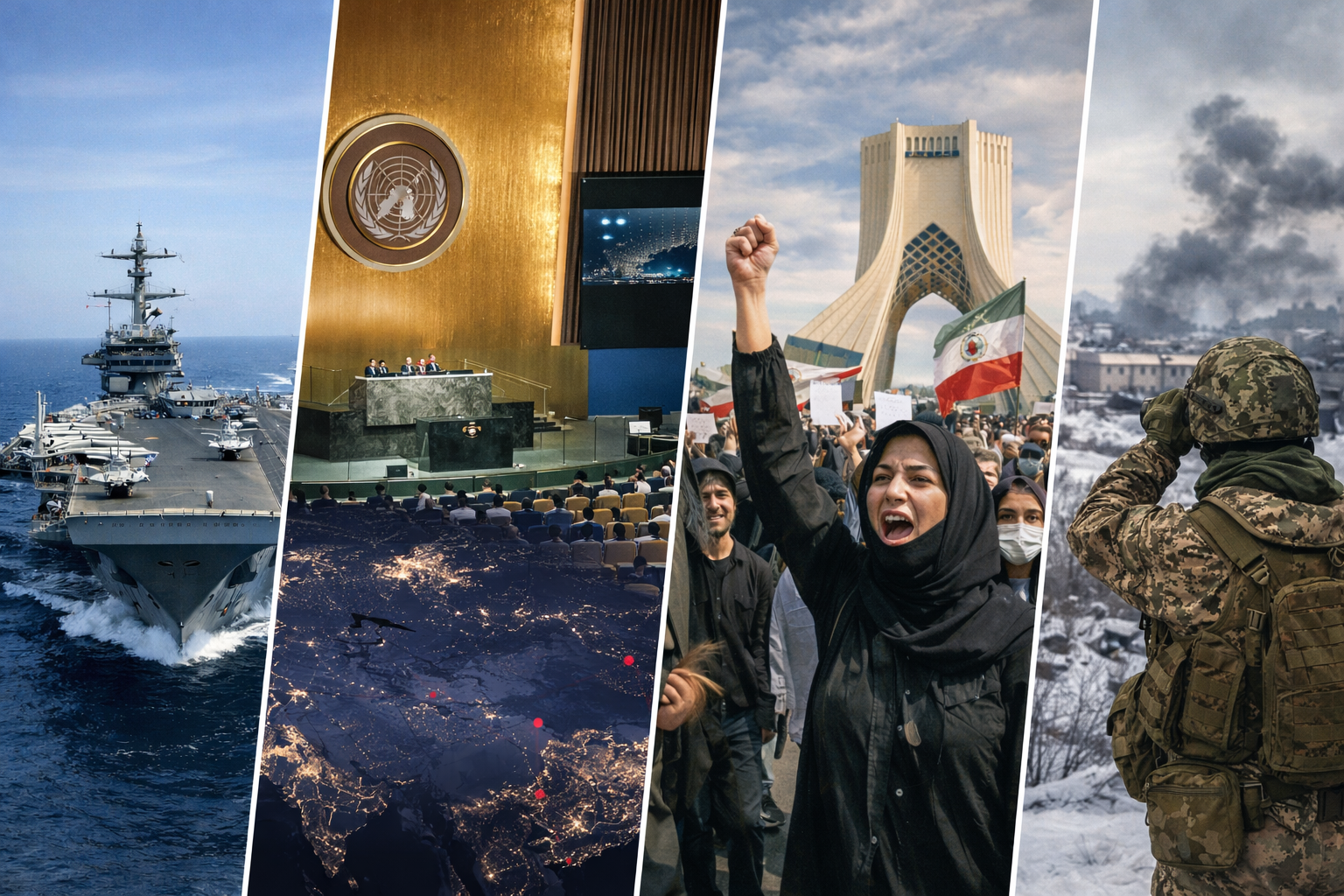
A Strategic Forecast on Geopolitics, Energy Markets, Security and Systemic Risk
Iran War and the Global Reach
The 2026 conflict involving Iran, United States and Israel has evolved beyond a battlefield confrontation. What began as calibrated strikes and counter-strikes has developed into a geopolitical rupture with global economic implications.
Energy markets have reacted first. Diplomatic alignments have hardened second. Financial markets, supply chains and security doctrines are now recalibrating in real time. Governments across Europe, Asia and the Gulf are preparing not simply for escalation, but for structural transformation in the international system.
“This is not simply a Middle East conflict,” a senior European energy diplomat said privately in Brussels. “It is a stress test for the post-Cold War order.”
Between now and 2030, five plausible scenarios frame the range of outcomes. None are predetermined. All carry significant implications for global markets, security architecture and alliance politics.
1. Contained Conflict with Economic Ripples
The Status Quo Crisis — Disruptive but Manageable
This baseline scenario assumes hostilities remain intense but geographically limited. Military exchanges between Iran and U.S./Israeli forces continue through airstrikes, cyber operations and maritime incidents, yet stop short of region-wide conventional war.
Key Characteristics
- Localised engagements in the Persian Gulf and Levant.
- Proxy flare-ups in Lebanon, Iraq or Yemen without full regional mobilisation.
- Persistent volatility in oil markets, especially around the Strait of Hormuz.
- Central banks responding cautiously to inflationary pressures.
Brent crude prices oscillate amid disruption fears, though alternative supply from the United States, Brazil and West Africa prevents sustained structural shortage.
An energy strategist at a London-based commodities firm observed: “The market is pricing risk, not collapse. As long as flows continue, even at a premium, the system adapts.”
Global Impact
- Gold and other safe-haven assets outperform.
- Equity markets experience periodic sell-offs tied to escalation headlines.
- Inflation remains elevated but manageable through monetary tightening.
Security services worldwide intensify counter-terror monitoring. Proxy groups aligned with Tehran — including Hezbollah and the Houthis — remain active but calibrated.
Assessment: Disruptive, expensive and politically fraught — yet contained within existing global structures. Risk premiums rise, but systemic collapse is avoided.
2. Prolonged Energy Shock and Economic Reorientation
A Structural Energy Disruption
In this scenario, sustained targeting of infrastructure and maritime routes creates persistent uncertainty in Middle Eastern energy flows. Insurance premiums surge. Shipping costs escalate. Export capacity becomes unreliable.
Oil prices breach $100 per barrel and remain elevated for extended periods. Liquefied natural gas markets tighten sharply. Emerging economies heavily dependent on imported fuel face acute pressure.
A Gulf-based shipping executive noted: “Even without a blockade, perception alone can choke trade. Tanker operators don’t gamble with missiles.”
Structural Economic Consequences
- Europe accelerates renewable deployment and LNG diversification.
- Asian economies deepen strategic petroleum reserve coordination.
- Import-dependent emerging markets confront balance-of-payments stress.
The conflict becomes an accelerant of energy transition policy — not out of climate ambition alone, but geopolitical necessity.
An Asian policy adviser framed it bluntly: “Energy security has overtaken decarbonisation as the political driver — but the two now align.”
Assessment: Prolonged energy stress forces structural adjustment in global supply chains, trade flows and investment patterns. Inflation remains persistent. Growth slows unevenly across regions.
3. Systemic Strategic Reset
A 9/11-Scale Inflection Point
This scenario envisions escalation that fundamentally reshapes global security architecture. A major attack on energy infrastructure, a prolonged closure of Hormuz, or multi-theatre escalation across the Red Sea and Eastern Mediterranean triggers structural realignment.
Under this pathway:
- NATO expands its Middle East focus.
- Energy infrastructure protection becomes central to defence policy.
- Cybersecurity spending surges globally.
- Strategic alignment among Western states deepens.
“This would be a paradigm shift,” said a former U.S. national security official. “Security doctrine would expand from counterterrorism to full-spectrum energy defence.”
Financial markets would embed geopolitical risk structurally into commodity pricing, currency valuations and long-term capital allocation.
China and Russia recalibrate. Stability favours trade, yet instability offers leverage. Their strategic calculus becomes pivotal.
Assessment: Comparable to post-September 11 transformation — a reordering of alliances, defence budgets and global risk perception.
4. Stalemate and Chronic Instability
The Long War Without Resolution
Here, neither side achieves decisive advantage. Conflict normalises into asymmetric engagement, cyber operations and proxy confrontation.
Iran leverages proxy networks to maintain pressure. Gulf states deepen defence coordination and domestic security investment.
A regional analyst in Abu Dhabi summarised: “This becomes background noise — but expensive noise. Investors price it in.”
Global Effects
- Persistent risk premiums on oil and commodities.
- Elevated terrorism risk in distant theatres.
- Trade routes gradually bypass high-risk corridors.
Global growth slows marginally as uncertainty dampens capital flows. Aviation and maritime insurance remain elevated. Intelligence cooperation intensifies.
Assessment: A new normal of tension — costly but below catastrophic threshold. Economic drag without global rupture.
5. Direct Great-Power Confrontation and System Breakdown
The Worst-Case Scenario
A miscalculation or mass-casualty event draws external powers directly into confrontation. Multi-front escalation extends beyond the Gulf.
Potential developments:
- U.S. and allied forces confront Iran-aligned networks directly.
- China and Russia align more overtly to counter Western dominance.
- Global governance institutions struggle to mediate.
Markets plunge into shock mode. Structural inflation embeds itself in food and energy supply chains. Currency volatility intensifies.
“This is the scenario policymakers fear most,” said a senior multilateral official. “Once great powers are engaged, escalation becomes harder to control.”
Assessment: Low probability but profound impact. A fragmentation of the global order into competing blocs reminiscent of great-power conflict logic.
Cross-Cutting Structural Forces
1. Iran’s Internal Stability
Iran entered 2026 amid inflation, currency weakness and social unrest. Domestic resilience directly affects external projection capacity. Internal fragility increases unpredictability.
2. Energy Market Feedback Loops
Energy volatility feeds into inflation expectations, central bank policy and fiscal strain. Even without worst-case disruption, elevated risk premiums may persist through 2027–2028.
3. Proxy and Non-State Actors
Hezbollah, Hamas and the Houthis amplify escalation risk. Asymmetric attacks can generate outsized economic shock.
4. Strategic Hedging by Major Powers
China seeks energy security and trade stability; Russia may benefit from higher hydrocarbon prices. Both balance leverage against systemic instability.
Which Scenario Appears Most Likely?
Current indicators suggest:
- Baseline containment is most probable in early 2026.
- Chronic instability and energy-driven economic reorientation are plausible medium-term paths.
- Systemic reset depends on disruption to major energy or alliance nodes.
- Great-power confrontation remains low probability but high impact.
A European central banker remarked privately: “Markets are remarkably resilient — until they are not. The risk is miscalculation.”
Early Warning Indicators to Watch
- Sustained disruption of the Strait of Hormuz.
- Escalation metrics involving proxy cross-border strikes.
- Structural (not temporary) upward shifts in Brent crude or LNG benchmarks.
- Formal defence pact expansions or emergency summits.
Investors, policymakers and corporate planners increasingly treat geopolitical risk as structural rather than episodic.
Conclusion: A Conflict That Extends Beyond the Battlefield
The Iran war of 2026 is not merely a regional confrontation. It is a stress test for the global system — energy security, alliance architecture, financial resilience and institutional governance.
Whether the outcome is containment, chronic instability, structural reset or systemic fracture, the consequences will reverberate through 2030 and beyond.
As one Middle Eastern diplomat concluded: “This is not about who wins a battle. It is about how the world absorbs the shock.”


