


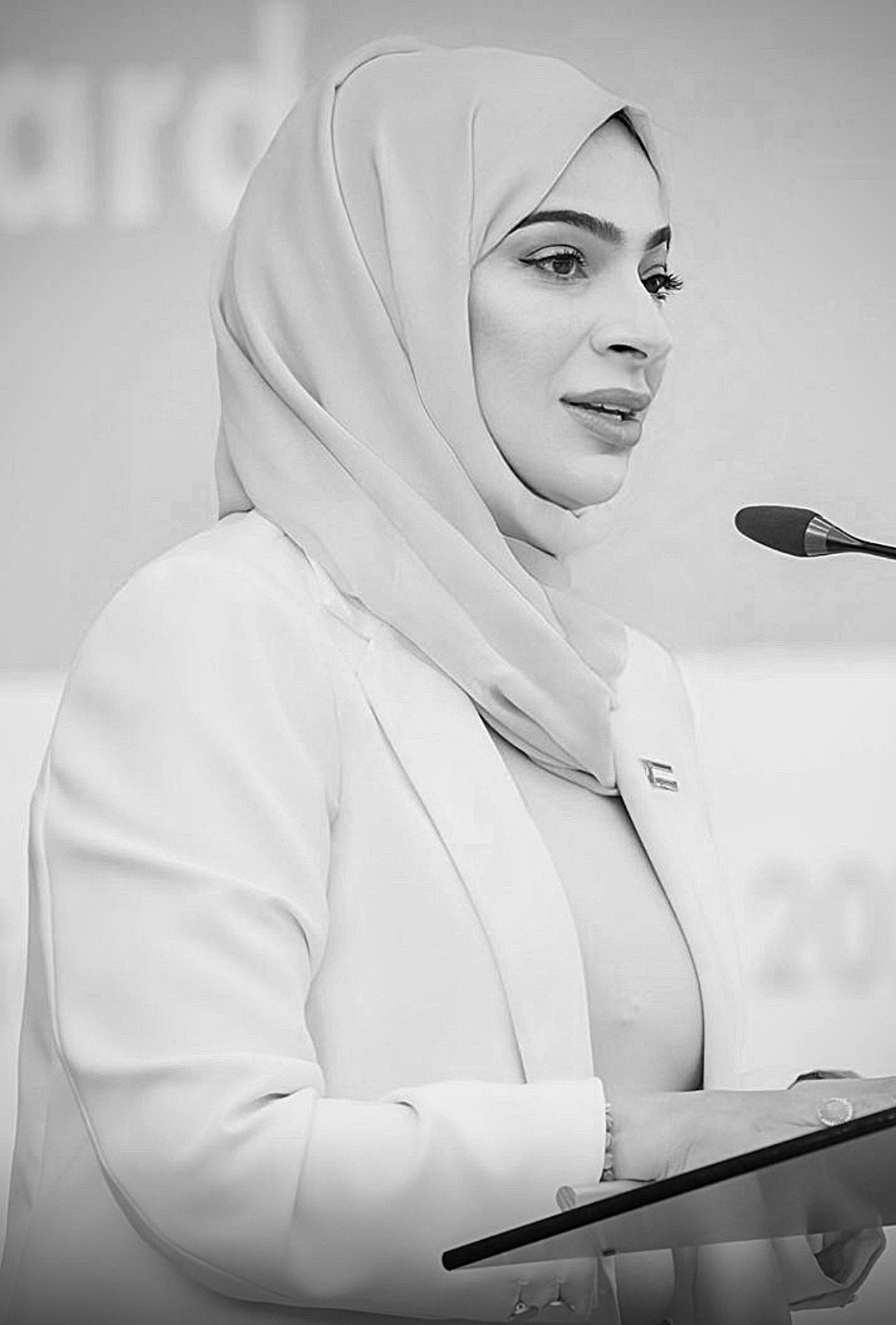
In an era marked by geopolitical fragmentation, institutional strain, and a widening gap between formal authority and real power, few perspectives are as valuable as those formed across law, government, corporate leadership, and multilateral diplomacy. This conversation examines how rules are made, how they fail, and what gives institutions legitimacy when enforcement is weak and consensus is fragile.
In this wide‑ranging interview, Lubna Qassim,formerly Deputy Permanent Representative of the United Arab Emirates to the United Nations and International Organizations in Geneva and International Lawyer, Is in conversation with Danish Shaikh, Editor at The International Wire. Together, they explore law as a strategic instrument, the realities of power inside boardrooms and multilateral forums, and how governance must adapt as the post–Cold War order gives way to a more contested, multipolar world.
Career Architecture and Intellectual Formation
Your career spans elite private practice, C suite leadership, national lawmaking, and multilateral diplomacy. Looking back, was this trajectory intentional, or did each role reveal limitations in the previous one?
I would say it was less a plan and more a pattern of restlessness. Each role taught me something profound, but also showed me what I couldn’t see from that vantage point.
Private practice sharpened the technical skills; there’s no substitute for that rigor. But you’re always at one remove from where decisions actually get made. Corporate leadership brought you into the room where strategy happens, but you’re still operating within the constraints of a single organization. Government gave you authority and the chance to build systems, but it comes with political realities and time horizons that can feel limiting.
Multilateral diplomacy revealed something different entirely: the longer arc. How norms evolve, how institutions either adapt or ossify, how power shifts in ways that aren’t visible quarter to quarter.
Looking back, it seems deliberate. Living it, it felt like following intellectual curiosity and a low tolerance for staying comfortable.
Early in your career at Clifford Chance, you worked across London and Dubai. How did operating inside a global legal system shape your understanding of legal pluralism early on?
Legal pluralism wasn’t a theory I read about; it was the water I swam in. When you’re working on transactions that touch both London and Dubai, you realize very quickly that law isn’t universal. It’s negotiated. The same principle behaves completely differently depending on the culture it lands in, the institutions enforcing it, and the incentives at play.
That stripped away any illusion of there being one correct legal answer. What matters is whether a system is coherent, whether it has legitimacy, and whether it actually works. Training across common law and the UAE system gave me structure. But working across both taught me something more valuable: pragmatism. It made me less interested in doctrine and more interested in outcomes. That habit stuck, and it shaped how I’ve moved through every institution since.
Law as a Strategic Instrument
As Group Chief General Counsel and Executive Vice President at Emirates NBD, you aligned legal strategy with commercial priorities. How should legal leaders balance risk aversion with organisational ambition?
They should stop treating caution as their value proposition.
Legal leaders aren’t paid to say no. They’re paid to make ambition survivable. The skill isn’t in spotting risk everyone can do that. The skill is in distinguishing existential risk from manageable risk, then designing a path through the uncertainty.
When you understand the business deeply enough, you stop being the brakes and start being the navigation system. Risk aversion for its own sake is just expensive timidity.
Having led high stakes litigation and governance reform, what do you believe boards still misunderstand about the role of in house legal counsel?
Too many boards still think of legal counsel as insurance something you have in case things go wrong.
The best in house lawyers aren’t there to clean up after decisions are made. They’re there to shape them before they happen. Legal advice that arrives late always sounds conservative. Legal advice that arrives early sounds strategic.
The difference is usually timing, not temperament.
Legal Reform and State Capacity
During your time in government, you helped shape reforms in company, arbitration, insolvency, and foreign investment law. What principles guided these reforms: competitiveness, certainty, or global integration?
All three, but sequence matters.
Certainty comes first. Without it, nothing else works. Capital won’t flow, courts won’t function, people won’t trust the system enough to use it.
Competitiveness follows; capital is mobile and impatient. If your framework isn’t competitive, you’re just writing laws that people route around.
Global integration matters, but only when it strengthens domestic capacity rather than substitutes for it. Reform isn’t about importing what works elsewhere. It’s about building systems people actually trust.
In your experience, what is harder: drafting good law or ensuring its effective implementation?
Implementation. Without question.
Drafting good law is an intellectual problem. Implementation is an institutional one. You need alignment across courts, regulators, practitioners, and political stakeholders. The machinery has to be ready and willing to absorb what you’ve written.
You can draft perfection and still watch it fail because the system wasn’t prepared for it.
Multilateral Diplomacy and Negotiation
As Deputy Permanent Representative to the United Nations in Geneva, how has your legal background shaped your approach to multilateral negotiation?
It trained me to listen for what’s not being said.
In multilateral settings, text is rarely just text. It’s positioning. A single word can signal alignment, reservation, or red lines that won’t be crossed. A legal background makes you attend to that precision because you know that ambiguity can mean consensus today and conflict six months from now.
Multilateral forums are often criticised as slow or declaratory. From the inside, where do they genuinely add value?
They add value where bilateral power can’t.
Multilateral forums create norms, vocabulary, and pressure points that shape behavior over years, not weeks. They’re not fast. But they’re cumulative. And in a world where power is fragmenting, even fragile consensus is more durable than unilateral action.
The mistake is expecting them to deliver speed. What they deliver is legitimacy, and legitimacy compounds.
Governance, Institutions, and Trust
Trust in institutions, national and international, is under strain globally. From your vantage point, where does institutional legitimacy now come from?
Performance, not pedigree.
People trust institutions that solve actual problems, that explain their decisions clearly, and that admit when they’ve failed. Transparency without effectiveness is just noise. Effectiveness without transparency breeds suspicion.
Legitimacy used to be inherited. Now it has to be earned, continuously. The institutions that understand that will survive. The ones that don’t are already becoming irrelevant.
Global State of Affairs
Looking at the world today, marked by geopolitical fragmentation, economic uncertainty, and institutional strain, how do you assess the current global state of affairs?
We’re living through a structural transition, not a series of episodic crises. And that distinction matters for how states and institutions should respond.
The post-1945 order, and even its post-1989 unipolar moment, rested on certain assumptions: American security guarantees, open trade as default, multilateral institutions as primary venues for coordination, the gradual convergence of governance models. Those assumptions are breaking down simultaneously.
Power is diffusing. Not just from West to East, that’s the obvious story, but from states to non-state actors, from governments to capital markets, from hard power to information power. China’s rise is real, but so is the growing influence of tech platforms, sovereign wealth funds, and transnational advocacy networks. The system is becoming multiplex rather than multipolar.
Norms are being renegotiated. On everything from data sovereignty to development finance to the boundaries of sovereign authority, states are contesting rules that seemed settled a decade ago. This isn’t collapse, it’s renegotiation under conditions where no single actor can impose outcomes.
The institutional architecture is revealing its brittleness. The UN Security Council, the Bretton Woods institutions, the WTO, these were designed for a different distribution of power and different types of challenges. They’re not failing uniformly, but they’re struggling to absorb shocks and adapt to new realities. And there’s no political constituency powerful enough to fundamentally reform them.
Here’s what worries me: the tendency to mistake transition for temporary disruption. I see governments, businesses, and institutions waiting for a “return to normal”, when normal was already unsustainable. The states and institutions that will remain relevant are those adapting their legal frameworks, their strategic postures, their alliance structures to the reality that’s emerging, not the stability that’s passed.
This doesn’t mean chaos is inevitable. Humans have navigated transitions before. But it does mean that the next equilibrium will look different from the last one, and clinging to old assumptions is a strategy for irrelevance.
Strategic Autonomy and Multipolarity
We’re seeing a proliferation of middle powers pursuing strategic autonomy, often hedging between major powers rather than choosing sides. Is this the end of traditional alliance structures, or a necessary adaptation to multipolarity?
It is a necessary adaptation.
Traditional alliances were based on existential dependency. Most middle powers no longer face that reality. Their economies are diversified, and power no longer travels as a single package.
Military strength does not guarantee economic leverage. Economic ties do not ensure diplomatic alignment. Middle powers are responding rationally by building options rather than loyalty.
The risk is miscalculation when rivalry intensifies. But exclusive alignment is fading. Flexible, overlapping, issue specific partnerships are becoming the norm.
Economic Statecraft and Its Limits
Economic statecraft, from sanctions to industrial policy to technology controls, has become as prominent as military power in great power competition. How do you assess the effectiveness of these tools, and are we reaching the limits of what economic coercion can achieve?
Economic statecraft still works, but only when used sparingly.
Sanctions are now routine, which encourages adaptation rather than compliance. Industrial policy creates costly duplication without guaranteed security. Technology controls slow rivals briefly but accelerate long term self sufficiency.
These tools lose force when overused. In a fragmented world, economic coercion without coordination or legitimacy hastens the decline of its own effectiveness.
Reflection and Forward View
If you were advising a young lawyer today, what would you tell them about building a career that crosses sectors without losing depth?
Depth doesn’t come from staying put. It comes from mastery.
Learn one discipline properly really properly before you try to translate it into another context. Move with purpose, not just impatience. And don’t confuse versatility with dilution. Some of the sharpest minds I’ve encountered have tested their expertise across multiple arenas.
The goal isn’t a linear career. It’s a coherent one.
Rapid Fire
Law as text or law as power?
Law as power, anchored in legitimacy.
Negotiation or litigation?
Negotiation.
Precision or pragmatism?
Pragmatism guided by precision.
Boardroom or negotiating room?
The negotiating room.
Multilateralism ideal or necessity?
A global necessity.
Legal certainty or strategic flexibility?
Strategic flexibility within clear legal frameworks.
Consensus or principled dissent?
Consensus where possible; principled dissent when necessary.
Reform from within or pressure from outside?
Reform from within, informed by external realities.
Leadership is learned or earned?
Earned through trust and results.
Lubna the lawyer or Lubna the diplomat?
Both by discipline and instinct.
One word that best defines effective diplomacy today?
Stewardship.

An international lawyer and former multilateral diplomat, Lubna Qassim brings experience across law, government, executive leadership, and international institutions.
Over a career spanning more than two decades, she has worked in elite private practice, led legal and governance functions at the C suite level in the financial sector, contributed to the UAEs national economic legislative reform, and, in 2018, was appointed by Presidential Decree as Minister Plenipotentiary First Degree to join the UAE Foreign Service, serving as Senior Legal Counsel to the UAE Minister of Foreign Affairs.
Most recently, she served as Deputy Permanent Representative of the UAE to the United Nations and International Organizations in Geneva (2019-2024) during a period of exceptional geopolitical strain. Her work spanned complex multilateral processes across human rights, trade, refugee crises, climate governance, science diplomacy, and global health. Across these domains, she consistently emphasised institutional legitimacy, legal coherence, and the slow but durable power of consensus‑building in an increasingly fragmented world.
- Iraq After Saddam: Regime Collapse, Occupation and the Long Shadow of State Failure
- The World Is Not Watching a Crisis Unfold — It Is Watching a Redesign
- What If the Biggest Hole in Global Climate Policy Isn’t Coal or Oil — It’s War?
- Diplomacy Is Not About Choosing Sides – It Is About Protecting Interests
- War in the Cloud


