


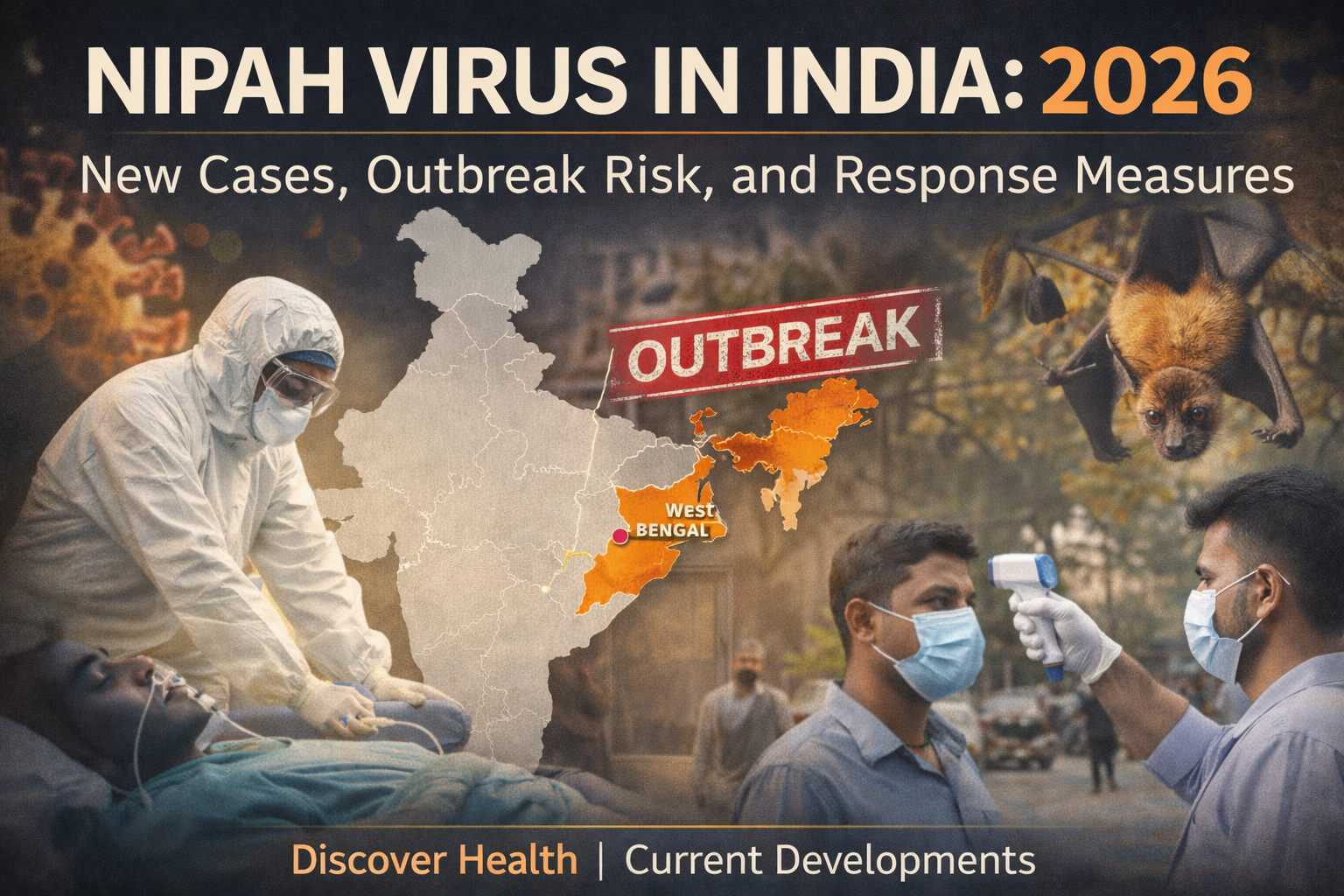
Nipah Virus in India (2026): Outbreak Status, Spread Risk, and What the World Is Watching
In early 2026, health authorities reported a new cluster of Nipah virus infections in eastern India, drawing attention across the region but not signalling a widespread epidemic.
What’s Happening Now
- Two laboratory-confirmed cases of Nipah virus infection have been identified in West Bengal State, with both patients being healthcare workers from the same private hospital.
- India’s Ministry of Health, working with the World Health Organization, activated public-health response protocols including isolation and contact tracing.
- All close contacts of the two confirmed cases have been monitored and, to date, none have developed symptoms or tested positive.
- Both infected individuals were confirmed by real-time RT-PCR testing in January 2026, and one has shown signs of improvement while the other remains in serious condition.
Authorities emphasise that this represents a localised outbreak response, not community transmission or national spread.
Why the Concern, and Why Panic Is Wrong
High Fatality but Inefficient Spread
Nipah virus is considered serious because it has a high case fatality rate (historically 40–75%). However, it does not spread as easily as many respiratory viruses. Human-to-human transmission has occurred only in close contact settings such as households or hospitals.
Localised and Controlled
The current cluster is linked to a single healthcare setting in West Bengal. Epidemiological assessments, including by the European Centre for Disease Prevention and Control, suggest this pattern does not indicate widespread community transmission.
WHO’s Assessment
The WHO has publicly described the risk of further spread within India or internationally as low, noting no signs of unusual mutation or transmission acceleration.
This does not minimise the virus’s severity, but places it in context: vigilance and response are appropriate; panic and broad lockdowns are not.
Regional Alerts and Precautions
Several Asian countries, including Singapore, Thailand, Malaysia and Taiwan, have introduced health screening measures at airports and border checkpoints for travellers from West Bengal, largely as precaution rather than indication of cross-border spread.
Such measures underscore heightened vigilance across health systems, not evidence of uncontrolled spread.
What Experts Are Watching
Epidemiologists and regional public health bodies are monitoring several factors:
- Transmission chains: Are infections limited to known cases, or do undetected chains exist?
- Human-to-human spread: Nipah requires very close contact; efficient community transmission has not been observed.
- Zoonotic spillover: Fruit bats, the natural viral reservoir, continue to pose intermittent spillover risk.
According to experts, past outbreaks in India and neighbouring Bangladesh followed similar patterns—limited chains of transmission with rapid containment.
What This Means for India and Beyond
- Containment capacity: India’s public-health system activated outbreak response teams and contact tracing quickly.
- Surveillance: Enhanced monitoring and laboratory testing remain important, especially in high-risk states such as West Bengal and Kerala, which have seen previous outbreaks.
- Risk to general public: Current evidence suggests risk is low outside direct contact networks and well-controlled settings. Authorities do not recommend travel bans or broad restrictions.
Bottom Line
While the Nipah virus cluster in India has drawn global attention due to the pathogen’s lethality, the outbreak remains small, traceable, and largely contained under established public-health protocols. There is no evidence of widespread transmission or global spread at this time. Continued vigilance, effective disease surveillance, and rapid response infrastructure will be key to maintaining control in the weeks ahead.
Pharma Doesn’t Have an AI Problem — It Has a Delivery Problem
- Iraq After Saddam: Regime Collapse, Occupation and the Long Shadow of State Failure
- The World Is Not Watching a Crisis Unfold — It Is Watching a Redesign
- What If the Biggest Hole in Global Climate Policy Isn’t Coal or Oil — It’s War?
- Diplomacy Is Not About Choosing Sides – It Is About Protecting Interests
- War in the Cloud


