


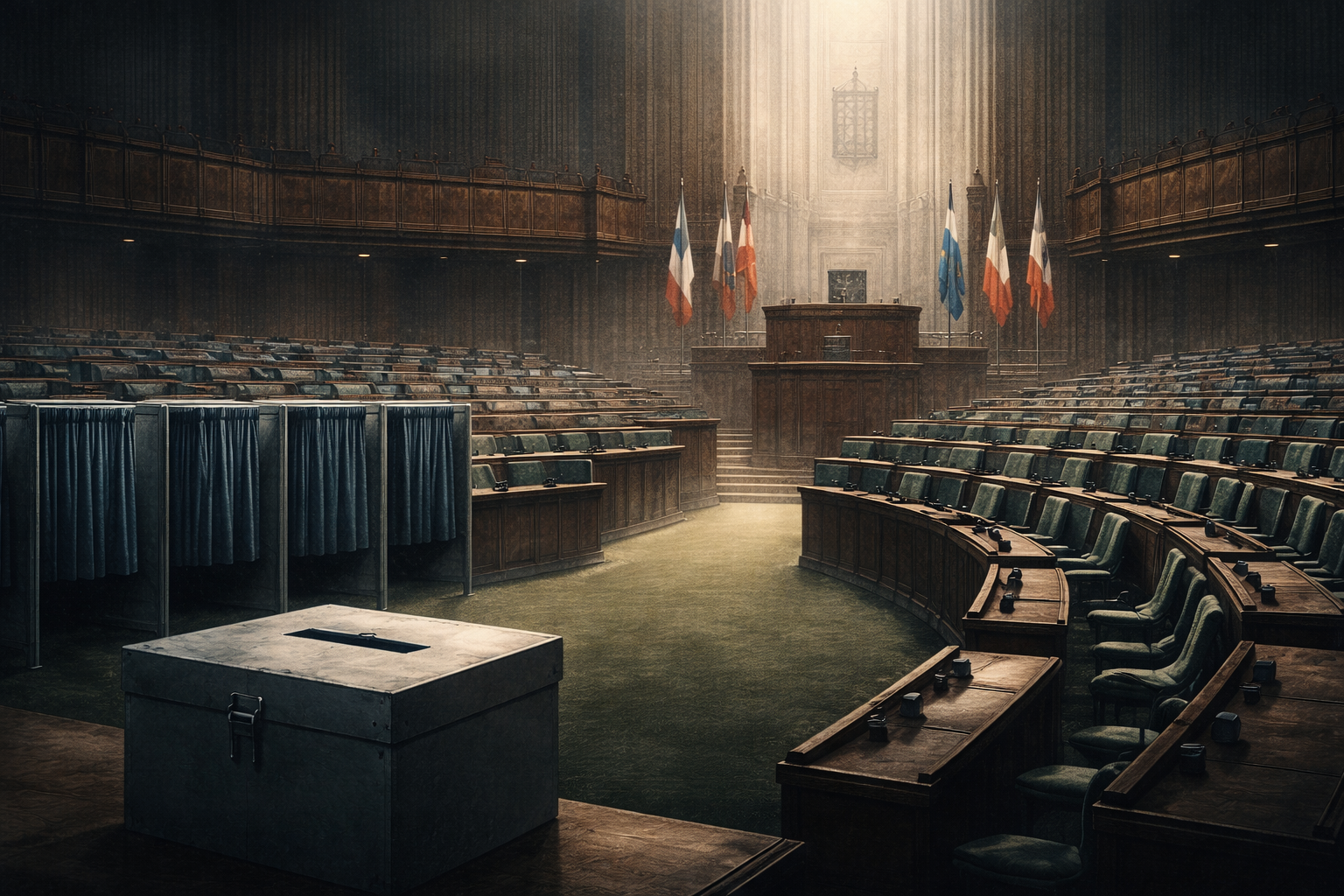
Democracy is being practiced more but believed in less.
“Democracy can survive without collapse, but not without belief.”
Democracy is often measured by the presence of elections, parliaments, and constitutions. Yet across many political systems, these formal structures remain intact even as public belief in democratic norms steadily erodes. Voters disengage, parties hollow out, and participation becomes procedural rather than meaningful.
This analysis explores the growing gap between democratic institutions and democratic commitment. It examines how systems designed to channel popular consent increasingly operate without it—sustained by habit, legal continuity, and international recognition rather than active civic belief.
The result is a paradox of modern governance: democracy persists in form while weakening in substance. Understanding this disconnect is essential to explaining why democratic backsliding often occurs without coups, crises, or formal breakdowns.
Participation Without Confidence in the Democracy Trust Crisis
Rising turnout is often treated as proof of democratic resilience. But the motivations behind voting have changed.Many voters no longer see elections as hopeful opportunities to shape policy or build a shared national future. Instead, voting is increasingly driven by defensive calculation — an attempt to block outcomes that feel unacceptable or irreversible.
In this environment, elections are less about aspiration and more about prevention.
Rather than asking, “Who will improve my country?” voters increasingly ask, “Who will do the least damage?” or “Who must not win?”
That is why turnout can rise while faith declines: citizens vote, but they don’t believe.
The Collapse of Institutional Trust
Trust has eroded steadily over the last two decades — not only in governments, but across the democratic infrastructure itself:
- Parliaments are seen as ineffective, gridlocked, or captured by elite interests
- Political parties are viewed as self-serving machines rather than representative organisations
- Courts are increasingly pulled into ideological conflict, losing their reputation for neutrality
- Media institutions face collapsing credibility, dismissed as biased, partisan, or manipulated
- Electoral systems and commissions, once treated as neutral referees, are now frequently challenged by losing camps
This institutional decline is crucial. It shows the crisis is not simply about policy preferences or leadership style — it’s a crisis of legitimacy in the intermediary structures of democracy.
Importantly, this does not mean citizens reject democracy as an ideal. Polling across regions consistently shows strong abstract support for democratic principles such as free elections and civil rights.
What has collapsed is trust in the institutions meant to deliver those ideals in practice.
Democracy remains legitimate in theory — but distrusted in reality.
Voting as Insurance, Not Expression
As trust falls, voting takes on a new function.
Traditionally, voting was seen as a way to express preferences, values, and consent. Today, for many citizens, voting operates more like insurance — a way to reduce risk in an unstable political environment.
People vote:
- to prevent the “wrong” side from taking full control
- to avoid outcomes seen as catastrophic
- to keep the system from collapsing — even if they dislike the system itself
In this climate, abstention doesn’t feel like neutrality. It feels like surrender.
This helps explain the paradox: turnout rises not because optimism is rising, but because fear is rising.
How Polarisation Fuels the Turnout–Trust Paradox
Polarisation amplifies participation — and simultaneously destroys trust.
In highly polarised democracies, opponents are no longer perceived as legitimate rivals, but as existential threats. Political competition becomes moralised: one side is framed not as mistaken but as dangerous, corrupt, or anti-national.
That framing produces two outcomes at once:
1) Turnout increases
When every election is framed as “the last chance to save the country,” citizens mobilise.
2) Institutional legitimacy weakens
If the opposing camp is seen as illegitimate, then any institution that enables their victory — courts, electoral systems, media, constitutional rules — is assumed to be compromised.
In other words: the more democracy is treated as war, the less democratic institutions can remain trusted referees.
Over time, this creates a destructive cycle:
- winners fear losing power → they entrench
- losers feel cheated → they delegitimise outcomes
- institutions become politicised → trust falls further
Democracy keeps functioning — but it functions under strain.
A Thinner Democracy: Procedure Without Belief
This is how modern systems drift into what might be called “procedural democracy” — elections continue to occur, but faith in the process becomes shallow.
Citizens still vote, but they no longer assume:
- institutions are fair
- outcomes are legitimate
- governance is competent
- rules apply equally
Democracy survives as a procedure, but loses its cultural foundation — trust, patience, and civic generosity.
This is not democratic collapse in the classic sense. It is something quieter and perhaps more dangerous:
democratic exhaustion.
The system remains active, but hollow.
Conclusion: Rising Turnout Is Not Proof of Democratic Renewal
Higher turnout should not automatically be celebrated as democratic health.
Yes, participation matters. But participation cannot compensate for collapsing institutional credibility. Without trust, elections become moments of national crisis instead of tools of normal governance.
A democracy can survive without high enthusiasm, but it cannot survive indefinitely without legitimacy.
When citizens vote without believing, democracy becomes resilient in form — yet brittle in substance.
The challenge for modern democracies is not simply to mobilise voters. It is to rebuild institutional trust so that participation becomes meaningful again — not merely defensive.
Until then, rising turnout may be less a sign of renewal — and more a sign of strain.
Also Read: Democracy worldwide faces its ninth year of net decline: IDEA report


