


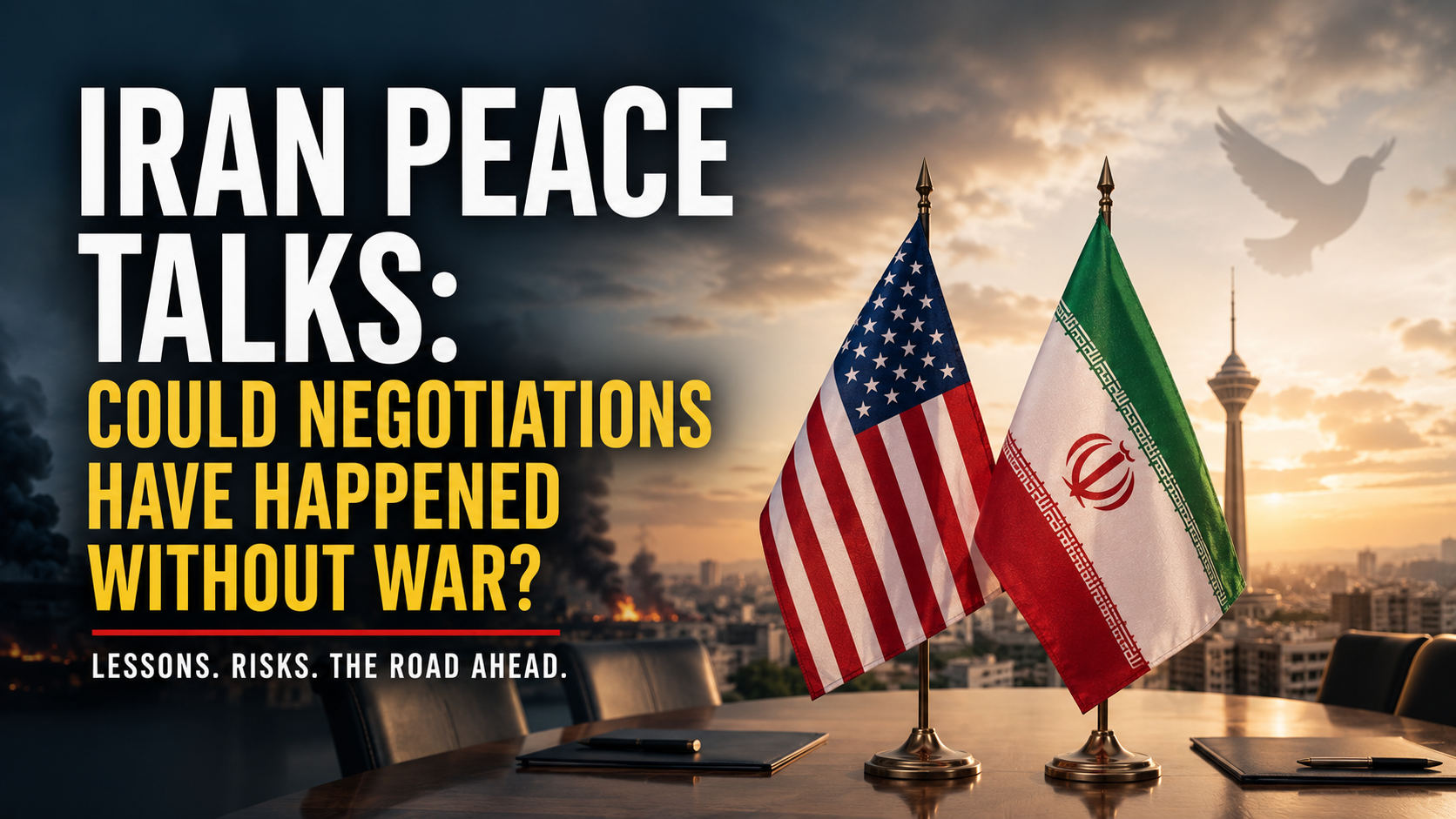
The renewed Iran peace talks raise one of the most painful geopolitical questions of the modern Middle East: did the region really need to descend into military confrontation, economic disruption, proxy escalation, and strategic instability before diplomacy became politically acceptable again?
For years, analysts warned that the absence of sustained diplomacy between Iran, the United States, Israel, and regional powers would eventually produce a larger regional crisis. Those warnings were repeatedly overshadowed by sanctions escalation, proxy warfare, domestic political pressures, and deep strategic mistrust on all sides.
Now, following one of the most volatile periods in the Middle East since the Iraq War era, reports suggest that Washington and Tehran are again discussing:
- Sanctions relief
- Maritime security arrangements
- Nuclear restrictions
- Regional de-escalation mechanisms
- Energy security concerns
The tragedy is that many of the issues currently being negotiated were not fundamentally new. Variations of these proposals existed years earlier — before escalation produced military casualties, oil market instability, regional insecurity, and growing fears of wider war.
The deeper lesson may be that diplomacy often becomes politically possible only after conflict demonstrates the cost of failing to pursue it earlier.
War did not create peace.
War created urgency.
Where Do Iran Negotiations Stand in 2026?
The current diplomatic environment surrounding Iran is shaped by accumulated pressure from several overlapping crises:
- Nuclear tensions
- Maritime insecurity
- Proxy conflicts
- Sanctions fatigue
- Energy market instability
- Domestic political pressures across multiple states
The collapse or weakening of earlier nuclear frameworks gradually eroded trust between Tehran and Western governments. At the same time, regional confrontations involving:
- Israel
- Hezbollah
- Gulf states
- Iraqi militias
- Syrian theaters
- Red Sea maritime routes
…created a security environment in which escalation increasingly became normalized.
By 2026, the costs of sustained confrontation have become more visible to all sides.
Iran continues facing:
- Severe sanctions pressure
- Currency instability
- Investment shortages
- Domestic economic frustration
The United States faces:
- Rising military costs
- Regional force overstretch
- Energy market volatility
- Strategic competition with China elsewhere
Regional powers face:
- Shipping insecurity
- Tourism risks
- Investment uncertainty
- Missile and drone threats
The result is not necessarily reconciliation.
It is recognition that unmanaged escalation carries growing costs for everyone involved.
Section I: The Historical Record — Why Diplomacy Failed Earlier
The failure of earlier diplomacy was not caused by a single event. It emerged gradually through the interaction of mistrust, ideology, domestic politics, and regional competition.
The Nuclear Issue
The Iranian nuclear program has remained the central point of confrontation between Tehran and Western governments for over two decades.
Iran consistently argued:
- Its nuclear activities were peaceful
- Sanctions were politically motivated
- Western powers sought regime containment rather than compromise
The United States and its allies argued:
- Iran’s enrichment activities created proliferation risks
- Tehran’s regional behavior undermined trust
- Strong verification mechanisms were necessary
The Joint Comprehensive Plan of Action (JCPOA) temporarily reduced tensions by imposing nuclear restrictions in exchange for sanctions relief.
However, the framework remained politically fragile from the beginning.
Its weaknesses included:
- Limited domestic political consensus in Washington
- Israeli opposition
- Gulf security concerns
- Iranian mistrust of long-term American commitments
The later weakening and collapse of the agreement intensified strategic uncertainty on all sides.
The Proxy War Environment
Diplomacy was also undermined by the broader regional conflict structure.
Iran expanded influence through networks and allied groups across:
- Lebanon
- Iraq
- Syria
- Yemen
Regional rivals viewed these networks as instruments of Iranian expansionism.
Iran viewed them as:
- Strategic deterrence
- Defensive depth
- Resistance infrastructure against external pressure
This created a security environment where negotiations over nuclear issues became inseparable from wider regional power struggles.
Domestic Political Pressures
Domestic politics repeatedly narrowed diplomatic flexibility.
In Washington:
- Negotiations with Iran became politically polarizing
- Different administrations adopted radically different approaches
- Congress often resisted concessions
In Iran:
- Hardline factions distrusted Western intentions
- Economic hardship increased nationalist pressure
- Internal political competition complicated compromise
In Israel and Gulf states:
- Concerns about Iranian regional influence remained central
- Fear of inadequate enforcement mechanisms persisted
Each actor faced domestic incentives to appear strong rather than conciliatory.
“The central problem was not the absence of diplomatic options. It was that compromise carried higher short-term political risks than confrontation — until confrontation itself became too expensive.”
— Middle East Strategic Affairs Analyst
Section II: The Current Reality — What Escalation Actually Produced
The years of confrontation did not produce decisive strategic victory for any side.
Instead, escalation generated overlapping forms of instability.
Economic Instability
Sanctions severely constrained Iran’s economy but did not eliminate:
- Nuclear capabilities
- Regional influence networks
- Strategic resilience
At the same time, sanctions pressure contributed to:
- Currency volatility
- Inflation
- Energy market uncertainty
- Informal trade networks
- Smuggling economies
The global economy also absorbed indirect costs through:
- Higher shipping risks
- Insurance premium increases
- Energy price volatility
Maritime Security Risks
One of the most dangerous consequences involved maritime tensions near:
- The Strait of Hormuz
- The Gulf of Oman
- Red Sea shipping routes
Even limited disruptions triggered:
- Oil price spikes
- Shipping delays
- Insurance cost surges
- Financial market anxiety
The world economy remains deeply dependent on vulnerable maritime energy corridors.
This reality forced many governments to reassess the risks of prolonged confrontation.
Military Escalation
The region also experienced:
- Missile exchanges
- Drone warfare
- Targeted assassinations
- Cyber operations
- Proxy attacks
These actions increased pressure without producing lasting political resolution.
Instead, military escalation often hardened positions further while raising the risk of broader regional war.
The Strategic Miscalculation
Each side initially believed pressure would force concessions.
Washington believed:
- Economic sanctions would weaken Tehran strategically
Iran believed:
- Strategic patience and regional leverage would outlast Western pressure
Regional actors believed:
- Military pressure could reshape negotiation terms
In practice, all sides absorbed escalating costs without achieving decisive outcomes.
Section III: Could War Have Been Avoided?
Possibly — but only under conditions that did not exist politically at the time.
Several elements might have reduced escalation risk.
Incremental Trust-Building
Earlier diplomatic frameworks often attempted comprehensive solutions too quickly.
A slower process focused on:
- Maritime coordination
- Limited sanctions relief
- Humanitarian cooperation
- Regional communication channels
…may have created more sustainable confidence-building mechanisms.
Realistic Sanctions Phasing
Sanctions became both a pressure mechanism and a political obstacle.
Iran demanded meaningful economic relief.
Western governments demanded verifiable compliance first.
The sequencing problem repeatedly undermined negotiations.
More gradual and conditional sanctions structures may have reduced this deadlock.
Credible Monitoring Systems
Verification remained central to diplomatic credibility.
Successful long-term agreements required:
- Reliable inspections
- Transparency mechanisms
- International oversight
- Political continuity across administrations
Without durable enforcement trust, agreements remained vulnerable to political reversal.
Regional Security Guarantees
The broader Middle East lacked a stable regional security framework.
Without mechanisms addressing:
- Missile threats
- Proxy warfare
- Maritime security
- Regional influence competition
…nuclear negotiations alone struggled to stabilize the broader environment.
Section IV: Future Scenarios — What Happens Next?
The future of Iran diplomacy remains uncertain and fragile.
Several possible trajectories now exist.
Managed De-Escalation (Most Likely Near-Term)
The most likely short-term scenario involves limited stabilization through:
- Partial sanctions relief
- Maritime deconfliction
- Informal understandings
- Controlled nuclear restrictions
This would reduce immediate escalation risk without fully resolving deeper disputes.
Fragile Frozen Conflict
Another possibility is continued low-level confrontation:
- Intermittent proxy clashes
- Ongoing sanctions
- Limited diplomacy
- Periodic military incidents
This would preserve instability while avoiding full-scale war.
Broader Regional Framework (Long-Term Possibility)
A more ambitious scenario would involve:
- Gulf security arrangements
- Maritime coordination mechanisms
- Regional dialogue forums
- Integrated energy security cooperation
However, this requires political trust levels not currently visible.
Renewed Escalation
The risk of renewed confrontation remains significant.
Potential triggers include:
- Nuclear acceleration
- Maritime incidents
- Proxy attacks
- Domestic political shifts
- Israeli-Iranian escalation dynamics
The absence of stable long-term trust continues to make the region vulnerable to sudden crisis escalation.
Frequently Asked Questions
Why did earlier Iran diplomacy fail?
Earlier diplomacy failed due to:
- Mutual distrust
- Domestic political opposition
- Regional proxy conflicts
- Sanctions disputes
- Weak long-term political continuity
- Disagreements over enforcement and sequencing
What is the main issue in current negotiations?
The main issues include:
- Sanctions relief
- Nuclear restrictions
- Verification mechanisms
- Maritime security
- Regional de-escalation
These issues are interconnected rather than separate.
Could sanctions alone force Iranian concessions?
Sanctions significantly pressured Iran economically but did not fully eliminate its nuclear program, regional influence, or strategic resilience. Over time, sanctions also created adaptation mechanisms and alternative economic networks.
Why does maritime security matter so much?
The Middle East contains critical global energy transit routes, especially near the Strait of Hormuz. Disruption risks affect:
- Global oil prices
- Shipping costs
- Inflation
- Energy security
- Financial markets
Is a long-term peace agreement likely?
A comprehensive long-term settlement remains difficult because tensions involve not only nuclear issues but also:
- Regional influence competition
- Security guarantees
- Proxy networks
- Domestic political pressures
- Great-power rivalry
Conclusion: Diplomacy After Escalation
The current Iran peace talks reveal one of the harshest realities of international politics:
diplomacy often gains political momentum only after confrontation exposes the cost of failure.
Many of the ideas now being revisited:
- phased sanctions relief
- regional security dialogue
- nuclear monitoring
- maritime coordination
…were available years earlier.
What changed was not the existence of diplomatic options.
What changed was the accumulation of strategic pain.
Economic instability, military escalation, energy insecurity, and regional fatigue gradually created incentives for renewed negotiation.
The danger is that future diplomacy may remain trapped in the same cycle:
- pressure
- escalation
- crisis
- negotiation
- breakdown
- renewed confrontation
Unless deeper structural issues are addressed.
The Middle East is no longer shaped only by ideology or military power.
It is increasingly shaped by interconnected systems:
- energy markets
- shipping routes
- financial sanctions
- proxy networks
- global inflation pressures
- geopolitical competition
In that environment, conflict does not remain regional for long.
The central lesson of the Iran negotiations may ultimately be this:
war rarely resolves the disputes that failed diplomacy left behind.
It merely raises the cost of eventually returning to the negotiating table.


