


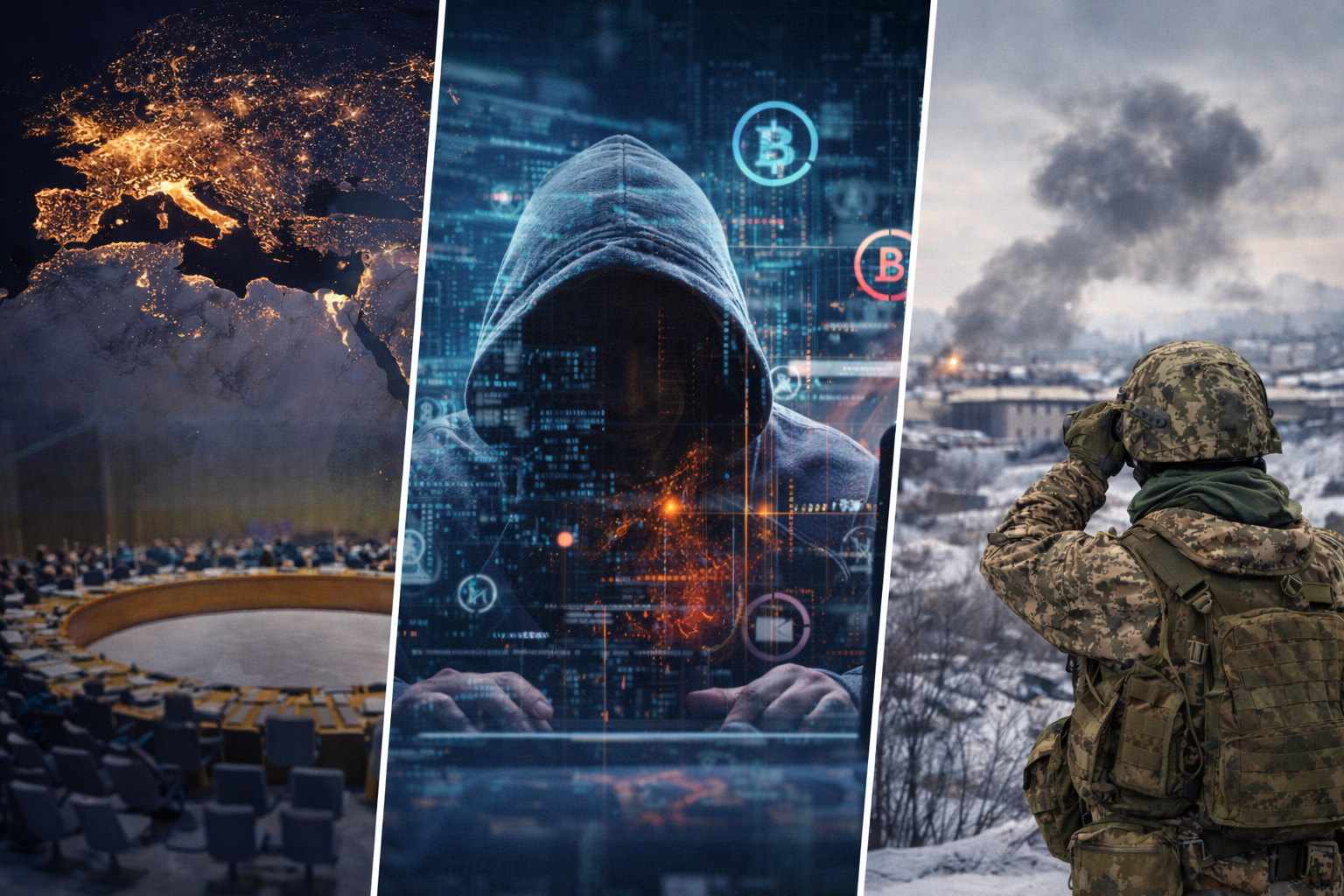
Reassessing Global Strategy in a Fragmented World
More than two decades after 9/11 reshaped global security architecture, the counterterrorism landscape has evolved from centralized networks to fragmented, digitally enabled movements operating across jurisdictions. Groups such as Al-Qaeda and ISIL no longer dominate headlines as they once did, yet violent extremism persists in adaptive forms—often intertwined with financial crime, regional instability and geopolitical competition.
At the heart of the international response lies a complex web of sanctions regimes, monitoring mechanisms and multilateral cooperation—much of it anchored within the United Nations Security Council. Yet as global politics grow more polarized, questions emerge about the durability and effectiveness of these frameworks.
In this conversation with Danish Shaikh, Editor, The International Wire, Dr. Hans Jakob Karl Schindler, Senior Director at the Counter Extremism Project and former Coordinator of the UN Security Council’s ISIL, Al-Qaeda and Taliban Monitoring Team, reflects on the evolution of counterterrorism policy, the enforcement of international sanctions, and the growing intersection between terrorism financing, compliance frameworks and geopolitical risk. From emerging financial technologies to extremism prevention, the discussion examines how governments and the private sector must recalibrate strategies in an era where security threats are increasingly transnational, decentralized and financially sophisticated.
As multilateral institutions confront fragmentation and shifting power balances, the central question remains: can international cooperation adapt quickly enough to manage the next phase of global extremism?
The Evolution of Counterterrorism Since 9/11
More than two decades after 9/11, how has the global counterterrorism architecture fundamentally evolved?
The global counter terrorism structure in 2026 is more integrated and effective than the one prior to the 9/11 attacks. Both on the multilateral level, from the sanctions regime of the United Nations Security Council, various UN counter terrorism structures, such as the Counter Terrorism Executive Directorate (CTED), to the UN Global Counter-Terrorism Coordination Compact a range of structures have been created that allow a significantly more integrated and coordinated counter terrorism response.
However, while the defensive systems have become more effective, the challenges have also increased. Chiefly among these are new technologies. From social media to cryptocurrencies to artificial intelligence (AI), many key aspects of terrorism such as propaganda, communication, coordination and financing have now a significant online component, allowing terrorist groups and networks to communicate, coordinate and finance themselves globally. As online systems have not yet been globally regulated in the same manner than the global financial industry has been, more works remains to be done.
How would you assess the effectiveness of the international response to transnational networks such as Al-Qaeda and ISIL?
The international response to al-Qaeda and ISIL forced both terror networks to significantly reorganise. Both started as strict hierarchical structures that were grounded in a fixed territory and centrally controlled. Due to the military intervention in Afghanistan al-Qaeda had to reorganise after the destruction of its terror infrastructure in the country in 2002. The Global Coalition Against Daesh was able to destroy the physical power structure of the so-called ISIL califate in Iraq and Syria until 2019. Both organizations are now networked structures in which regional affiliates play a significant role and in which centralized command and control structures are mostly absent.
However, this reorganisation does not mean that terrorism as such diminished. Regional affiliates, such as al-Qaeda’s JNIM and al-Shabaab in Africa or ISIL’s affiliates IS Sahel Province (ISSP) and IS West Africa Province (ISWAP) pose serious regional threats. In addition, some regional affiliates, such as IS Khorasan Province (ISKP) in Afghanistan, can develop external attack capabilities that allows them to strike targets outside their region. The ISKP organised attack on the Crocus City Hall in Moscow, Russia in 2024 clearly demonstrated this. Furthermore, the global communications environment that social media platforms present allows terror groups to inspire or guide individual perpetrators globally. Many attacks in Europe as well as the January 2025 attack in New Orleans, USA demonstrated the devasting impact that inspired individual perpetrators can have.
Therefore, in addition to keeping the capabilities of regional affiliates of these terror networks in check, understanding the importance of cyber space as a crucial battleground in countering terrorism is key.
Has the threat from violent extremism become more decentralized and fragmented?
It is clear that the threat from violent extremism has become more multifaceted and more fragmented. In addition to new phenomena, such as Nihilistic violent extremism, a new category of individual perpetrators has emerged. These individuals are motivated by extremely personalized extremist views that combine ideological narratives from various extremist milieus. The algorithmic organised information environment on social media platforms and messenger services which create ever more individualized information bubbles that feed this phenomenon. In addition, these perpetrators use relatively simple attack methodologies. The attacker of the Christmas Market in Magdeburg, Germany in December 2024 is an example of this category. Due to their lack of connection to a specific ideological milieu or a logistical support network, these perpetrators are hard to detect before their
attacks. However, such individuals usually have a very active online presence. A legally mandated obligation of internet service providers, which constantly monitor and analyse data on their platforms for commercial purposes and therefore have the capability to detect such individuals early, to proactively cooperate with security authorities would be necessary to counter this threat more effectively.
How should national security strategies adapt to evolving extremist methodologies?
The regional diversification of the terrorism threat as well as the development of new violence oriented extremist ideologies, primarily driven by developing online environment require that national strategies must develop. In addition to new technical capabilities to monitor more effective the online space, administrative reforms are also necessary. Countering violent extremism through rigid administrative silos that work on strictly separated categories of extremist milieus is no longer sufficient. Increased cooperation and coordination is necessary to detect new and emerging violence oriented extremist trends early and allow for the adjustment of counter measures in a timely manner.
Sanctions Enforcement & UN Mechanisms
How are UN Security Council sanctions practically enforced against groups such as ISIL and the Taliban?
The UN Security Council sanctions regimes against al-Qaeda/ISIL and the Taliban provide a global framework. Through the two respective sanctions lists, one of al-Qaida/ISIL and one for the Taliban, the UN Security Council highlights the key actors within these movements. Through its three sanctions measures, the global travel ban, the global asset freeze and the global arms embargo the two sanctions regimes establish globally effective counter measures to hamper the activities of these key actors.
However, the operational implementation of these measures is the responsibilities of the Member States through their respective government authorities. Over the years, the UN Security Council also developed coordination and cooperation mechanisms to assist governments in the effective implementation of these measures. For example, the UN Global Counter-Terrorism Coordination Compact includes a range of international organizations that play a key role in this respect such as INTERPOL, the Financial Action Task Force (FATF) or the International Civil Aviation Organization (ICAO), which is responsible for the global regulation of aviation. These organizations enable Member States to coordinate and cooperate as well as exchange key data in their implementation of UN Security Council sanctions.
What distinguishes effective sanctions regimes from symbolic ones?
Effective sanctions regimes continuously evolve. To achieve maximum impact and minimize unintended consequences, precise targeting of sanctions measures is crucial. This requires constant adjustments both of sanctions targets, those individuals and entities that are sanctioned, as well as adjustments to the measures, how these targets are sanctioned. On the one hand, threat environments change on the other hand, key actors adapt to sanctions pressure. Therefore, regular review mechanisms, which were introduced for the al-Qaida/ISIL and Taliban sanctions regimes of the UN Security Council, are crucial. These allow both for the review of the sanctions target list as well as for the necessary adjustments of the sanctions measures, in particular the detailed provisions for their operational implementation.
What role does monitoring and reporting play in strengthening sanctions compliance?
Monitoring and reporting are key instruments to ensure the continuing effectiveness of sanctions measures. Only if the developing threat is properly understood can the necessary adjustments to the sanctions targets and sanctions measures be decided and implemented in a timely manner.
Terrorism Financing & Financial Crime
How has terrorism financing evolved with new financial technologies?
New financial technologies play an increasing role in terrorism financing. Cryptocurrencies are a good example of this development. While this new technology did not play a noticeable role in terrorism and violent extremism financing a few years ago, currently, this new technology has become an indispensable part of the financial structure of all global terror groups and many regional terror groups. New technologies allow terrorist financiers global reach, for example to address potential donors and raise funds on a much broader scale than ever before. In addition, the currently still uneven global regulatory environment allows terrorism financiers to exploit regulatory loopholes and gaps by moving between various jurisdictions.
What vulnerabilities exist within global financial systems that extremist groups attempt to exploit?
The global regulatory environment is not yet sufficiently developed to effectively counter the misuse of new financial technologies by terrorism financiers. For example, in several countries cryptocurrencies are not yet considered legal tender and hence no effective regulation of this technology exists in these jurisdictions. In addition, technologies consistently evolve and develop. For example, non-custodial wallets, cryptocurrency wallets which are provided as shareware to users online present a particular difficult challenge. These wallets are not connected to commercial entities and hence there is no addressee for regulatory measures that obligate know-your-customer or due dilligence procedures. While only five years ago, non-custodial wallets were not particularly user friendly and required a significant amount of technical expertise, they have become increasingly easy to use and therefore play an ever growing role in cryptocurrency transactions. This creates blackholes within the blockchain in which user identities cannot be established. Of course, such technical gaps are exploited by terrorism financiers. Therefore, not only the regulatory framework but also technical monitoring capabilities must continue to evolve to ensure that the risk of misuse of new financial technologies for terrorism financing is effectively mitigated.
How do anti-money laundering (AML) frameworks intersect with counterterrorism objectives
Terrorism financing and money laundering have always been treated as distinct phenomena and areas of expertise. However, increasingly both financial crime areas intersect. For example, Hezbollah generates a significant portion of its income through the transport and distribution of illegal drugs and its global money laundering network. Therefore, to effectively counter terrorism financing, in particular the financial systems of large terror organizations, expertise both in counter terrorism financing as well as in anti-money laundering is necessary.
What is the role of the private sector in preventing the financing of violent extremism?
The private sector plays a crucial role in countering both the financing of terrorism as well as violent extremism. Private sector systems and tools are misused by terrorist and violent extremist financiers to raise, store and move funds. In addition, private sector systems also contain the crucial identification data this is necessary to target these financiers. It is of key importance that private sector actors have the necessary awareness of the methods that terrorist and violent extremist financiers deploy to circumvent internal control systems.
Therefore, effective cooperation systems that allow both strategic, tactical and operational cooperation between private sector stakeholders and government authorities are necessary. On the one hand these cooperation mechanisms should ensure that private sector stakeholders are continuously informed about the evolving threat landscape and developing financing methodologies of terrorist and violent extremists. On the other hand these mechanisms should ensure the effective and timely exchange of relevant data between the private sector and the respective government authorities.
How should compliance frameworks evolve to address emerging digital risks?
Compliance systems have to content with ever growing and developing technical challenges. For example, it is no longer possible to separate the fiat and cryptocurrency environments. Financial systems, in particular of large terror groups and networks, increasingly rely on financing both through fiat as well as cryptocurrencies. Furthermore, social media and crowdfunding platforms as well as messenger services play a crucial role in the financial structures of terror and violent extremist groups. It is on these platforms and through these services that terrorists and violent extremists address their sympathisers and funders. It is there that crucial financial information is transmitted and funds are raised, stored and moved.
Therefore, compliance systems should include effective mechanisms to monitor such platforms and services. Know-your-customer and due dilligence procedures should be adjusted to enable the systematic and effective collection of data from these platforms and services.
Rapid Fire
Prevention or enforcement?
Enforcement is an indispensable part of prevention.
Sanctions or diplomacy?
Sanctions are part of diplomacy, they can enable diplomacy in conflict situations.
Multilateralism or national strategy?
Both are necessary, in an era of transnational terrorism threats, multilateral cooperation and
coordination should always be part of any national strategy.
Intelligence sharing or financial tracking?
Financial tracking generates data that is a key component of intelligence sharing.
Regulation or innovation?
Regulation are a necessary component of innovation. New technologies are always going to
be misused by nefarious actors, such as terrorists, violent extremists or criminals. To limit
this misuse, regulation will always be required.

Dr. Hans-Jakob Schindler is the Senior Director of the Counter
Extremism Project (CEP) in New York and the Auschwitz Center on Hate, Extremism and Radicalization (ARCHER) at House 88 as well as Managing Director of CEP Germany gGmbH and CEP Poland in
Oświęcim. He leads the overall work and strategic development of this transatlantic think tank and advocacy organization.
In addition, he serves on the advisory board on preventing and combatting Islamist extremism of the Federal Ministry of the Interior in Germany, chairs the advisory board of BerFin Advisory and is a member of the Berlin Anti-Financial Crime Forum. He also chairs an UNODC-GPML project bringing together financial investigators from government authorities focusing on combatting the financing of violent extremism globally and chairs the Working Group of the
Eradicate Hate Summit in Pittsburgh that brings together US-based, transnational and international organizations focusing on disrupting the financing of extremist violence in the United States.
He also serves as the co-chair of the Advisory Board of the Global Diplomatic Forum (GDF) in London, is a member of the international advisory board of the Global Counter Terrorism Council (GCTC) in India, and a member of the Board of Directors of Compliance and Capacity Skills International (CCSI) in New York.
In 2013 he joined the ISIL (Da’esh), al-Qaida and Taliban Sanctions Monitoring Team of the United Nations Security Council and served as the Team’s Coordinator from 2015 to 2018. As Coordinator he regularly briefed the members of the Security Council on the global terrorism threat and was responsible for the development of global counter terrorism sanctions.
Prior to his appointment, he worked as an associated partner for West Sands, an associated consultant for Stirling Assynt and as Program Director for the Institute for Strategic Dialogue
(ISD) in the United Kingdom. Between 2005 and 2011 he held the position of First Secretary Political Affairs and Liaison to the Security Forces at the German Embassy in Tehran. From 2001
until 2005 he was part of the federal government of Germany’s team investigating al-Qaida in Afghanistan, Pakistan and Central Asia. Having studied in Tübingen, at Georgetown in Washington D.C., and Tel Aviv, he holds a Master and PhD degree in International Terrorism from St. Andrews University, Scotland.
Counter Extremism Project (CEP): www.counterextremism.com
Auschwitz Center on Hate Extremism and Radicalization (ARCHER): https://archerathouse88.com
Why Sanctions Failed Against North Korea


