


Why Germany Leads Europe in Workforce Attraction
As Europe grapples with labour shortages, demographic decline, and uneven migration outcomes, Germany stands apart. Not because it offers the highest wages or the easiest bureaucracy—but because it possesses something rarer: the infrastructure capacity to absorb people at scale.
Germany’s strength lies in its ability to distribute opportunity beyond a single global city. Engineers, healthcare workers, logistics professionals, and manufacturing specialists are not forced into one overcrowded capital. Instead, they can settle across a dense network of cities, industrial zones, and regional hubs without sacrificing economic prospects.
This structural depth has made Germany the European Union’s most reliable workforce magnet—and its most resilient.
Infrastructure as National Advantage
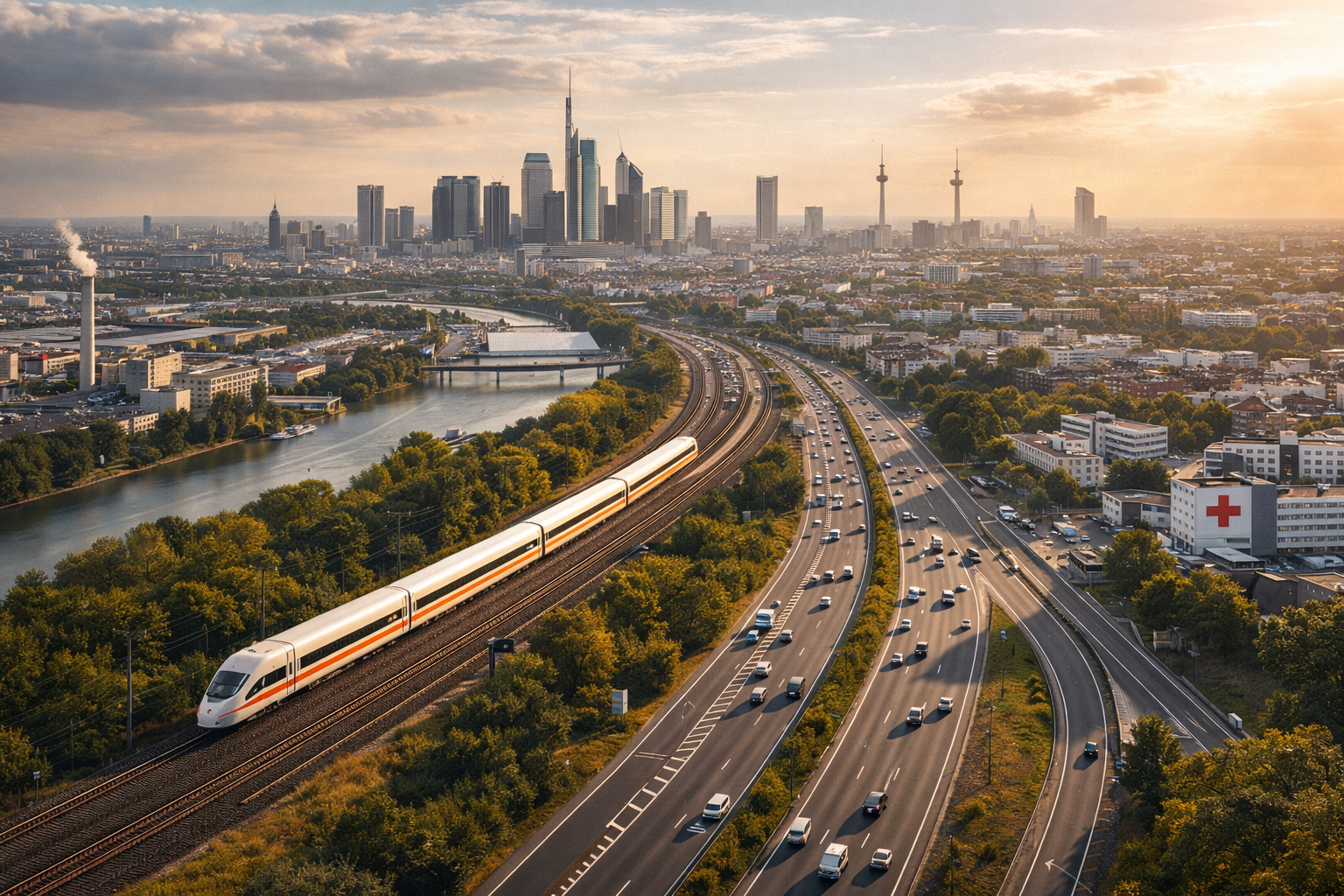
A Dense, Nationally Integrated Transport Network
Germany’s rail and road systems are the backbone of its labour mobility.
- One of the world’s densest rail networks, linking major cities with regional and industrial centres
- The Autobahn motorway system, enabling efficient freight and commuter movement
- High-capacity logistics corridors connecting ports, factories, and inland hubs
This allows workers to live outside expensive urban cores while remaining economically connected—an advantage few EU countries can replicate.
Industrial Zones Integrated With Cities
Unlike economies where industry is geographically isolated, Germany’s industrial model is urban-adjacent.
- Manufacturing clusters embedded in mid-sized cities
- Industrial parks linked directly to rail and road freight
- Close proximity between workplaces, housing, and services
This integration reduces commuting friction and supports long-term settlement, especially for migrant workers and families.
The Power of Tier-2 and Tier-3 Cities
Germany’s workforce appeal is anchored in its regional strength, not metropolitan concentration.
Cities such as Leipzig, Dresden, Nuremberg, Stuttgart, Duisburg, and Mannheim host:
- Advanced manufacturing and engineering firms
- Logistics and supply-chain operations
- Hospitals, research institutions, and vocational centres
For migrants, this means economic mobility without urban saturation. Opportunity is not confined to Berlin, Munich, or Frankfurt.
Reliable Public Services and Utilities
Germany’s infrastructure advantage extends beyond transport.
- Universal healthcare access with deep regional coverage
- Stable electricity, water, and digital utilities
- Predictable public education and vocational training systems
For workforce migrants, especially skilled and semi-skilled workers, this reliability lowers risk and encourages permanent settlement rather than short-term churn.
Who Germany Attracts—and Why
Germany’s labour pull is structural rather than cyclical.
Key Workforce Groups
- Engineers and technical specialists
- Manufacturing and industrial workers
- Logistics and warehouse professionals
- Healthcare staff, particularly nurses and caregivers
Demand exists across regions, allowing workers to match skills with locations rather than chase a single urban labour market.
Settlement Beyond the Capital City
A defining feature of Germany’s model is geographic flexibility.
Migrants can:
- Build careers in regional cities
- Access similar public services nationwide
- Move within the country without losing labour-market relevance
This decentralisation reduces social pressure and improves integration outcomes—an area where many EU states struggle.
Constraints: Where the Model Strains
Germany’s infrastructure depth does not eliminate friction.
Housing Shortages in Major Cities
- Acute shortages in Berlin, Munich, Hamburg, and Frankfurt
- Rising rents testing political and social tolerance
- Spillover pressure into surrounding regions
Bureaucratic Delays
- Slow visa processing
- Complex credential recognition
- Administrative burdens at local levels
These issues do not negate Germany’s advantage, but they slow absorption, particularly in high-demand sectors.
Editorial Takeaway: Structural Capacity Matters More Than Headlines
Germany’s continued appeal as a workforce destination is not driven by lifestyle branding or short-term incentives. It is driven by hard infrastructure, regional depth, and institutional reliability.
In an era when migration debates dominate European politics, Germany remains the EU’s most structurally capable absorber of large workforces—not because it is frictionless, but because its systems are built to scale.
As labour shortages deepen across Europe, Germany’s model underscores a simple lesson: people follow infrastructure long before they follow policy promises.


