


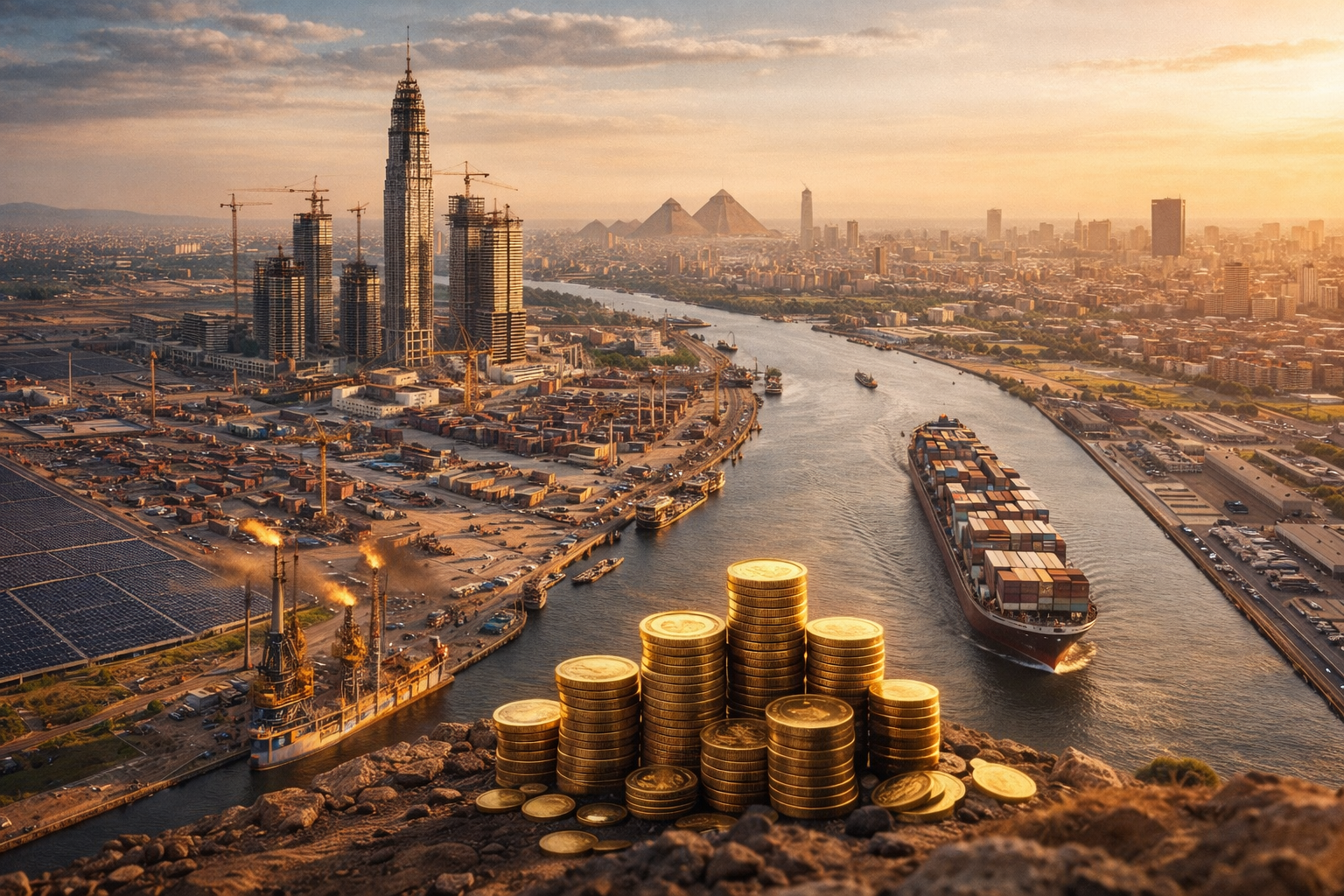
The world’s energy geography is being redrawn by the clean energy transition, geopolitical disruptions, and a scramble for the critical minerals that power the future
Introduction: The Energy Order Is Being Rebuilt
For most of the twentieth century, global energy geopolitics was defined by one commodity — oil — and by the geographic reality that most of the world’s proven reserves were concentrated in a relatively small number of countries, most notably in the Persian Gulf. Energy security meant oil security, oil security meant managing relationships with producing states and protecting the sea lanes through which oil flowed to consuming economies, and the politics of energy were inseparable from the politics of the Middle East.
That map is being redrawn. The energy transition — the accelerating shift from fossil fuels toward renewable electricity generation, electric transportation, and clean industrial processes — is the most significant transformation of the global energy system since the early twentieth century transition from coal to oil. It is reshaping the geography of energy production, the economics of energy trade, the strategic priorities of energy-importing and energy-exporting nations, and the supply chains on which both the existing fossil fuel system and the emerging clean energy system depend. Understanding the new global energy map requires looking simultaneously at the fossil fuel system that still dominates and the clean energy system that is growing at remarkable speed to challenge it.
But the transition is not simply replacing one set of geopolitical dependencies with a cleaner, more politically neutral alternative. It is creating a new set of dependencies — on the critical minerals essential for batteries, solar panels, wind turbines, and electric motors — whose supply chains are as geographically concentrated as the oil supply chains they are gradually replacing, and whose political implications are only beginning to be fully understood.
Section I: The Fossil Fuel Map Is Changing Too
The LNG Revolution and European Energy Reorientation
The most dramatic near-term shift in the global energy map has not been driven by the clean energy transition but by the disruption of Europe’s gas supply relationship with Russia following the 2022 Ukraine invasion. For decades, European gas markets were deeply integrated with Russian supply through a network of pipelines that provided reliable, relatively affordable natural gas but created significant energy dependency on a single supplier. That dependency was exposed as a serious strategic vulnerability when Russia reduced and ultimately cut gas supplies to Europe, triggering the most severe energy crisis in Europe since the 1970s oil shocks.
Europe’s response has been the most rapid and most comprehensive energy system reorientation in modern peacetime history. European countries have dramatically expanded LNG (liquefied natural gas) import capacity — building floating storage and regasification units at a pace that would have seemed impossible before the crisis. The United States became Europe’s largest LNG supplier, a reversal of the energy relationship that would have been barely imaginable a decade earlier. Norway significantly expanded gas exports. And the crisis accelerated the clean energy transition, with solar and wind capacity additions in Europe reaching record levels in 2023 and 2024 as energy security concerns reinforced climate policy motivations.
| ~40% of European gas previously supplied by Russia before the 2022 Ukraine invasion Europe’s rapid pivot away from Russian gas toward LNG imports and accelerated renewable deployment represents the fastest large-scale energy system reorientation in modern history. The transition imposed significant short-term economic costs — high energy prices, industrial production cuts — but reduced Russian gas dependency from approximately 40% to under 10% within two years. |
| “Europe’s energy crisis was an accelerant for changes that were already underway but moving too slowly. The crisis compressed a decade of energy transition into two or three years in some areas — particularly LNG infrastructure and offshore wind. The long-term energy security architecture that emerges will be fundamentally different from what preceded it.” — Fatih Birol Executive Director, International Energy Agency |
Section II: The Clean Energy Supply Chain Geography
China’s Dominance of Clean Energy Manufacturing
The clean energy transition is creating a new set of supply chain geographies — and those geographies are currently dominated by China to a degree that rivals the Gulf states’ historic dominance of oil supply. China controls approximately 80 percent of global solar panel manufacturing capacity, around 70 percent of lithium-ion battery cell manufacturing, roughly 60 percent of wind turbine manufacturing, and a dominant position in the processing of virtually every critical mineral required for clean energy technology — including lithium, cobalt, nickel, rare earth elements, and graphite.
This concentration reflects decades of deliberate Chinese industrial policy — subsidies, manufacturing scale, technology development, and the strategic acquisition of mining and processing assets in resource-rich countries — that has built Chinese companies into dominant positions across the entire clean energy technology value chain. Western policymakers are now confronting the strategic implications of building a clean energy future on supply chains that are concentrated in a single country in ways that create the same kind of dependency risk that Gulf oil concentration created for twentieth-century energy security.
Critical Minerals — The New Oil?
The critical minerals required for clean energy technology — lithium for batteries, cobalt for battery cathodes, nickel for high-density batteries, rare earth elements for wind turbine magnets and electric motors, copper for electrical infrastructure, silicon for solar panels — have supply geographies that are highly concentrated and in some cases located in politically challenging jurisdictions. The Democratic Republic of Congo produces approximately 70 percent of global cobalt — a mineral essential for most current battery chemistries. Lithium production is concentrated in the ‘lithium triangle’ of Chile, Argentina, and Bolivia, with additional major production in Australia. Rare earth processing is overwhelmingly concentrated in China.
| ~70% of global cobalt production comes from the Democratic Republic of Congo The DRC’s cobalt dominance — combined with Chinese control of much of the processing infrastructure and Chinese corporate ownership of many of the mines — creates a supply chain concentration in a critical clean energy mineral that Western energy transition strategies have not yet fully resolved. Similar concentration risks affect lithium, rare earths, and graphite. |
| “We are replacing dependence on OPEC oil with dependence on a small number of countries for critical minerals. If we don’t build more diversified and resilient supply chains for these materials, the clean energy transition could create new geopolitical vulnerabilities rather than eliminating the old ones.” — Dr. Isabelle Boemeke Energy security researcher and policy advocate; founder, Isodope nuclear energy communication initiative |
Section III: The Emerging Energy Multipolarity
The United States as Energy Superpower
The United States has undergone a remarkable energy transformation over the past fifteen years, driven primarily by the shale revolution that unlocked vast reserves of oil and natural gas from tight rock formations using hydraulic fracturing technology. The US became the world’s largest oil producer in 2018, surpassing both Saudi Arabia and Russia — a development that would have seemed implausible at the time of the 2008 oil price spike, when commentators were extensively discussing ‘peak oil’ and the end of American energy abundance. American LNG export capacity has grown rapidly, transforming the US from a gas importer to the world’s largest LNG exporter and giving American foreign policy a new energy diplomacy tool of significant value in supporting European energy security.
The Gulf States’ Clean Energy Ambitions
The major Gulf oil producing states — Saudi Arabia, the UAE, Qatar, and others — are investing heavily in clean energy capacity, both domestically and internationally, in recognition that the long-term trajectory of oil demand creates a strategic imperative to diversify revenues before the transition reduces their primary income stream. Saudi Arabia’s Vision 2030 explicitly addresses this imperative. The UAE has made significant investments in nuclear power (the Barakah nuclear plant), in solar generation (the Mohammed bin Rashid Al Maktoum Solar Park), and in hydrogen production. These moves position Gulf states to remain energy exporters in a post-fossil-fuel world — exporting clean electricity, green hydrogen, and the capital that sovereign wealth funds accumulated during the oil era.
Section IV: Energy Security in the New Map
The new global energy map is more complex, more multipolar, and more intertwined with technology supply chains than its fossil-fuel predecessor. Energy security in this environment requires managing multiple simultaneous dependencies: on fossil fuels that will remain significant for decades; on LNG supply chains that are exposed to both infrastructure disruption and geopolitical pressure; on clean energy manufacturing supply chains dominated by China; and on critical mineral supply chains concentrated in a small number of countries with varying degrees of political stability and geopolitical alignment.
The countries best positioned in this new energy geography are those with abundant renewable energy resources (solar, wind, hydropower) combined with either domestic critical mineral resources or secure access to them through diversified supply chains. This combination — which a relatively small number of countries possess in full — will increasingly define energy security in the twenty-first century in the way that domestic oil production or secure relationships with major oil exporters defined it in the twentieth.
The energy transition is not eliminating geopolitical risk from energy supply — it is transforming the geography of that risk. The countries and companies that understand the new map early will have significant strategic and commercial advantages over those that continue to think about energy security in exclusively fossil-fuel terms.
Conclusion: The Transition as Strategic Opportunity and Challenge
The global energy transition represents simultaneously the largest investment opportunity and the most significant supply chain transformation of the twenty-first century. Trillions of dollars of clean energy infrastructure will be built over the coming decades. The supply chains for the materials and technologies that infrastructure requires are currently concentrated in ways that create strategic vulnerabilities similar to those created by fossil fuel concentration — and that a growing number of governments, companies, and investors are beginning to take seriously.
The new global energy map will be drawn not just by climate policy and technology economics but by the geopolitical competition for the minerals, manufacturing capacity, and market positions that will define energy security in a world that is progressively electrifying. Understanding that map — where the resources are, who controls the supply chains, which countries will be energy-independent and which will exchange one form of dependency for another — is essential for every government, every investor, and every business that depends on affordable, reliable energy to function.


